Change doesn’t start with policy; it starts with people.
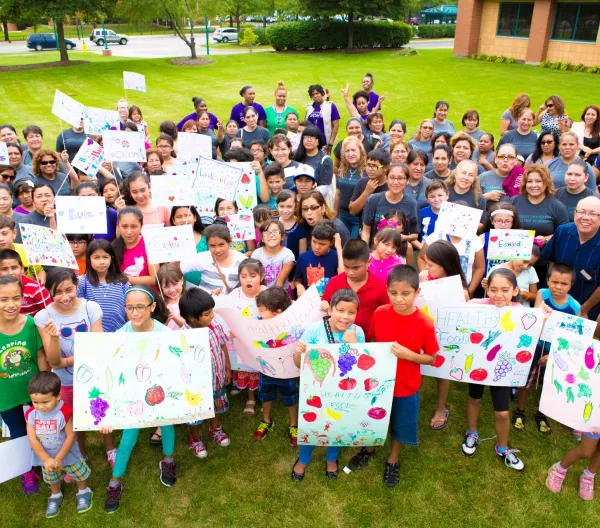
The Community Champions initiative in Clayton, Georgia, has spent the last three years investing in local voices, building leadership, and creating pathways for communities to advocate for healthier, more equitable futures.
The origin of the work
Three years ago, the Community Champions started as two separate efforts, funded by the Supplemental Nutrition Assistance Program-Education. One effort focused on organizational-level involvement, and the other focused on engaging individuals and elevating community voices. Both had similar goals of increasing access to nutrient-dense foods, promoting physical activity, and influencing policies through action and education through various approaches and networks.
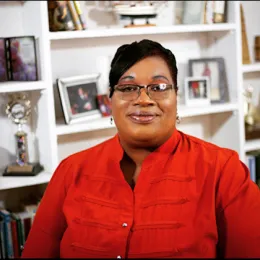
Hand, Heart, + Soul Project Executive Director, Wande Okunoren-Meadows, shares how the initiative emerged from the pattern she witnessed in her own experiences, where decisions were made for individuals not in the room. HHSP is a Clayton County, Georgia–based organization dedicated to strengthening community health by expanding access to nutritious food, supporting early care and education, and advancing neighborhood-driven wellness while centering equity and supporting Black, Brown, and limited-income families and community members.
Wande noticed an important issue: These individuals were sometimes unheard or invited to conversations too late in the process to meaningfully shape any real outcome. The issue seemed to be a lack of access to decision-making spaces and systems that truly value lived experience. Wande explains:
“The gems are already in the communities, people with wisdom and untapped ideas who need to be invested in, especially those with commitment, but may need time to strengthen their leadership and advocacy skills; these individuals simply need access and the opportunity.”
'A labor of love': Togetherness and exploration
As we continue to reflect on the origin of the work, it’s important to acknowledge both Crystal Perry, the founding liaison of the Community Champions, and the founding member of the Clayton Collaborative, Honorable Valencia Stovall.
Crystal shares, “Facilitating Community Champions was truly a labor of love. It brought together voices from different generations, backgrounds, and lived experiences to engage in honest conversations about food not just as something we eat, but as comfort, medicine, poison, fuel, culture, and connection.
As we explored the relationship between food and wellness, we also confronted the realities that make healthier choices difficult, from mindset and habits to systemic barriers such as food deserts and inequitable access to nutritious options. What made this journey especially meaningful for me was that it mirrored my own family’s experience.
Following my husband’s kidney failure and kidney transplant recovery, we were forced to reexamine our relationship with food and build healthier habits together. Through that process, we discovered that sustainable change does not come from judgment or restriction, but it comes from education, cultural relevance, flavor, creativity, and joy.
Community Champions demonstrated that when people are given knowledge, support, and a seat at the table, they become empowered to transform not only their own lives but their communities as well. This model shows us how meaningful change begins one conversation, one family, and one healthy choice at a time.”
HR 1, SNAP-Ed cuts, and a shifting landscape
However, as the national landscape shifted drastically and with the passage of HR 1 in 2025, which eliminated SNAP-Ed, the funding that supported the Community Champions programming became limited. A strategic decision was made to combine the Community Champions and the Collaborative into one unified effort. This merger created opportunities to maximize resources and build a stronger foundation for community organizing, which could outlast funding cuts.
While combining the programs made sense on paper, the transition also brought challenges that required patience and adaptation. It also required trust building and valuing the underappreciated capital of trust. Often, when working to build movements, it can sound good to start an initiative; however, if there is no alignment in purpose or what all are gathered for, various priorities can emerge.
Lessons learned and looking ahead
It is important to have shared values from the outset; joining under an umbrella without a common goal can lead to misalignment and delayed impact. It was important that participants sign an agreement form to solidify our purpose. A separate stipend form was also issued. Even with this, participation numbers were slower than anticipated, and it became clear that our previous engagement model would not support growth. We were more interested in active participation in meetings to deliver the work plan than in attendance metrics alone. We shifted our outreach model, which required more time and intentionality.
What we have seen is this: Engagement is built through multiple touchpoints, not one-offs.
It takes consistency, and consistency is based on trust; developing this requires dedicated staffing. We have managed to pull resources together and “stretch” staffing; however, this work requires a dedicated internal organizational staff person to support this effort, rather than piecemeal interactions, as well as a highly skilled meeting facilitator who has led the group thus far.
In addition, participants may have engaged with us through one entry point and gradually become more involved over time. Multiple touchpoints over time strengthen trust and increase awareness. Sometimes, the most meaningful outcomes often stem from consistent engagement, which also deepens lasting relationships and continued participation within a program.
Looking ahead, even as SNAP-Ed funding expires, we hope to bring young people’s perspectives and experiences that are essential to community transformation. We hope that through our intergenerational approach, young people will not be forced to confront the same challenges without solutions, but instead gain the knowledge and opportunities to move forward and grow in their work.
While we know that both attendance and participation metrics matter, we also know another measure of success lies in the voices being activated along the way, the leaders being developed, and the lasting impact being created throughout.
Learn more about Hand, Heart, + Soul Project, and consider subscribing to HHSP’s organizational newsletter to receive updates around events and opportunities to support community-led change.