


wolterke - stock.adobe.com.
Corporate kids' meal commitments
Restaurants are taking action to improve kids' meals by adopting company-wide standards for children's meals. These policies vary from restaurant to restaurant. Some chains have removed sugary drinks from their kids' menu, while others have gone a step further and have set nutrition standards for the entire kids' menu.
The real life impact
These efforts to improve restaurant kids' meals are paying off.
- The percentage of top 50 restaurant chains offering sugary drinks on their kids' menu has dropped from 93% in 2008, to 61% in 2019.
- In 2020, the Kids LiveWell program was strengthened and now requires participating restaurants to have healthy default beverages and two meals and two side dishes that meet nutrition standards (up from one each) on their kids' menu.
- In the past year, four localities and one state have passed kids' meal legislation
However, more work can be done to improve restaurant kids' meals. The majority of top 50 restaurants still offer sugary drinks on their kids' menus, and unhealthy foods like fried chicken, burgers, and fried potatoes dominate the menus.
Why healthy kids' meals?
Healthy restaurant kids’ meals can support caregivers’ efforts to feed their children well. These resources make the case.

Ensuring Healthy Options for Kids at Restaurants: The case for a federal kids’ meal policy
The national movement to improve restaurant kids' meals is growing. Communities and corporations have recognized the need for healthier options on the kids' menu.
View fact sheet here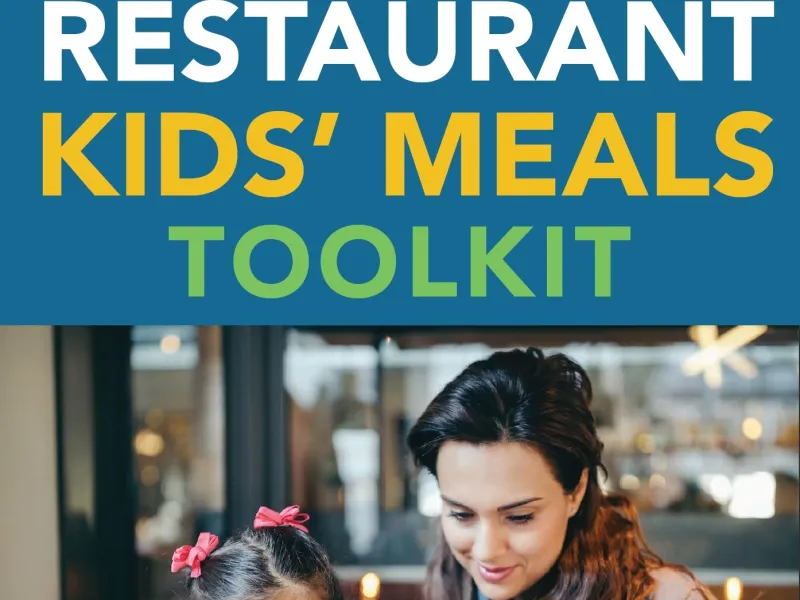
Toolkit: Restaurant kids' meals
This toolkit is specifically designed to support your efforts to help improve the options offered on kids’ menus at restaurants in your community.
View toolkit here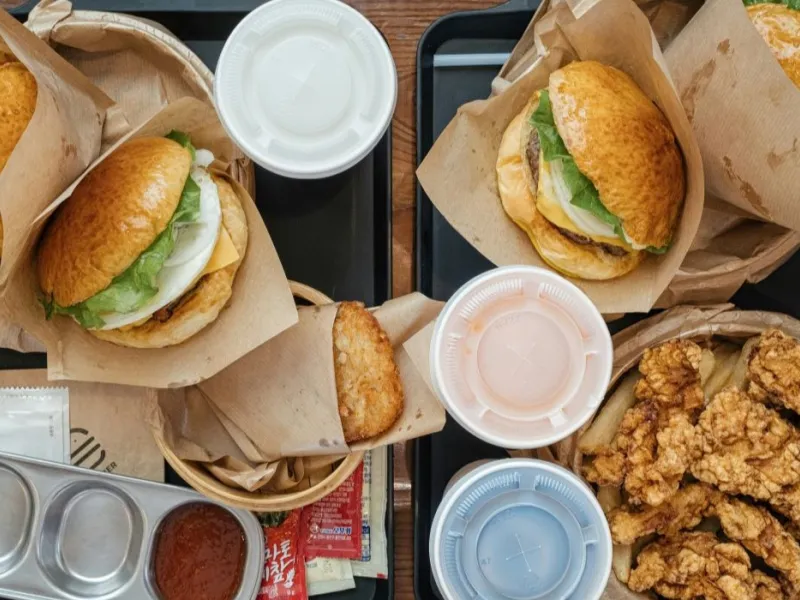
Ensuring healthy restaurant kids’ meals
Between 2015 and 2018, children ages 2-11 years old consumed an average of 11.4% of their daily calories from fast food alone, not accounting for food from other types of restaurants. A 2021 national survey found that one in six parents say their child eats fast food at least twice a week.
View fact sheet here
Restaurant Children’s Meals: The Faults with Unhealthy Defaults
Healthy defaults support parents by reducing barriers to feeding their children healthfully.
View fact sheet here
Healthy Restaurant Children’s Meals Improve Children’s Diets and Health
Restaurants and communities should support parents’ efforts to feed their children well.
View fact sheet here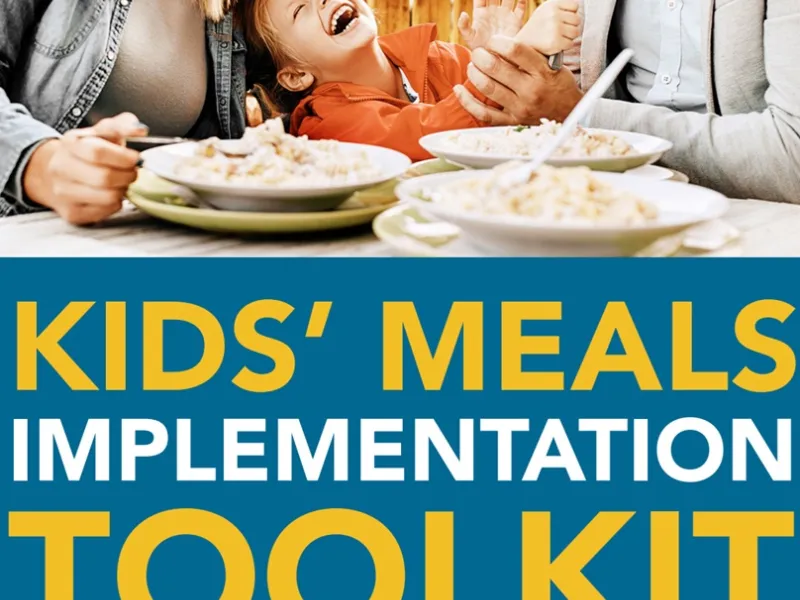
Kids' Meals Implementation Toolkit
This toolkit is focused on implementation and enforcement of policies that improve the options offered on kids’ menus at restaurants in your community.
View toolkit hereTypes of kids' meal legislation
There are multiple ways advocates can improve restaurant kids' meals at the state and local level.
Polling fact sheets


Resources
Corporate accountability
Learn what some restaurants are doing to improve their kids' meals and which restaurants are falling behind.


Take action
Join our action network
Get email updates with actions you can take to hold government agencies, Congress, and industry accountable.
Sara Ribakove's (she/her/hers) work is focused on creating a more sustainable, healthier, and equitable food system. Sara oversees CSPI’s Food and Environment initiative focused on policy and advocacy efforts that support sustainable food production and consumption patterns. She also oversees CSPI's work on improving the nutritional quality of food for children in restaurants. Prior to joining CSPI, Sara worked for the Food Recovery Network, a non-profit working to reduce hunger and food waste. She received her Master’s in Business Administration (MBA) from Georgetown University, focused on environmentally sustainable business practices and non-market strategy. She earned her B.A. in Public Health from the University of Rochester.

Sara Ribakove, MBA
Campaign Manager, Food and Environment