Healthy School Meals for All: A collective effort to bring free school meals to students in Illinois
Healthy Schools Campaign.
Following the loss of universal, free school meals funded by the federal government during the COVID-19 pandemic, the Healthy School Meals for All coalition in Illinois worked with bill sponsors Senator Laura Ellman and Representative Maurice West to write and pass Public Act 103-0532, Illinois’s Healthy School Meals for All Kids law, in 2023. The Healthy School Meals for All coalition is housed in the Illinois Alliance to Promote Opportunities for Health (IAPOH) coalition, convened by the Illinois Public Health Institute. IAPOH is a statewide policy and systems-focused multi-sector coalition that works to improve access to nourishing foods and safe and accessible physical activity, and reduce barriers to optimal health for Illinoisans. The coalition is one of the key drivers of nutrition and food system policy in Illinois, with goals to increase nourishing food access, including by leveraging federal feeding programs, and build an equitable Illinois food system.
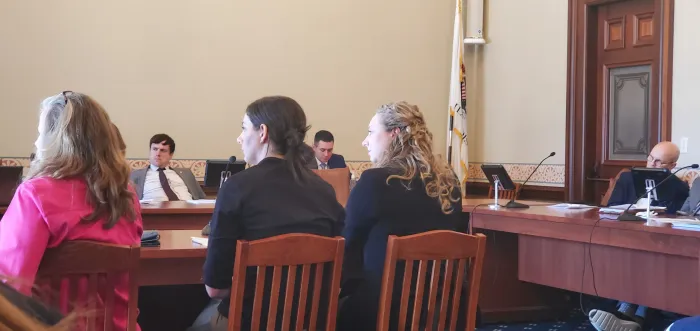
Despite its passage in 2023, the Healthy School Meals for All Kids law remains underfunded. From fiscal years 2015-2026, Illinois has appropriated $9 million to the free meals line item, the minimum level required of Illinois to participate in the National School Breakfast and Lunch Programs. The coalition has returned to Springfield, the Illinois capitol, every year to advocate for a sufficient appropriation to make universal, free school meals a reality in Illinois.
Healthy Schools Campaign.
Expanding the effort
In 2025, CSPI awarded a Food Policy Catalyst grant to Healthy Schools Campaign (HSC) to lead a grassroots campaign to bolster the work of the Healthy School Meals for All Coalition and advocate for the full funding needed to make free school meals a reality for every public school student in Illinois.
For over two decades, HSC has worked to ensure students have equitable access to healthy, high-quality school meals. This work is central to HSC’s mission and reflects a longstanding commitment to improving student health through policy change, stakeholder engagement, and community leadership. HSC’s approach to policy advocacy is grounded in stakeholder engagement and working in effective coalitions at the local, state, and national levels.
HSC has a demonstrated record of success in leading effective policy campaigns that result in measurable, sustainable improvements within large urban school districts and at the state level. HSC works very closely with Chicago Public Schools (CPS) as well as other Illinois school districts.
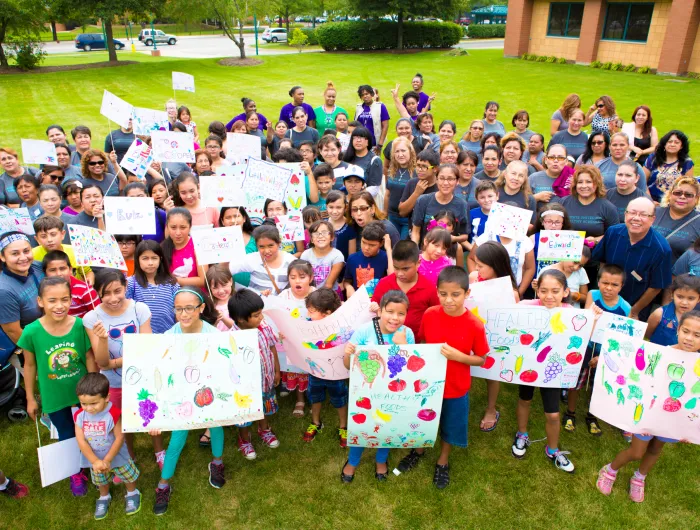
One of the key drivers of HSC’s impact has been its ability to engage key stakeholder and issue groups to inform and influence district-level school food policy decisions. Parent leaders, supported through HSC’s Parents United for Healthy Schools (PUHS) program, have played a central role, and their sustained engagement has led to important policy and practice shifts, including changes to the CPS wellness policy, feedback mechanisms that engage students and parents, and direct improvements in how school meals are delivered at individual school sites. PUHS and other channels for engaging families, such as community advisory boards and school wellness teams, equip parents with the tools and support needed to navigate and influence complex school systems. HSC’s parent efforts are focused in BIPOC communities.
With the generous support of CSPI, HSC is now leveraging its experience in grassroots advocacy to build a network of organizations, school districts, and individuals across the state to raise their voices and urge legislators to fund Healthy School Meals for All.
Healthy Schools Campaign.
Healthy School Meals for All: 2026 and beyond
Free school meals are a key strategy for addressing food insecurity and access to nutritious, reliable meals. In Illinois, a state with more than two million K-12 students, fully funding universal (free) meals will have a profound impact at a time when the social safety net has been severely damaged as a result of recent federal law, and food insecurity is on the rise.
Families and communities across the state are increasingly advocating for Governor Pritzker and the legislators to meet their financial obligation to Illinois’ students, families, and schools. Support for universal school meals in Illinois is very strong and spans the entire state. "Having free meals at schools helps my mom be less stressed," said a student in southern Illinois. A parent shared how important it is to fully fund this law, "With the rising cost of food, this helps ease the burden on families."
This year, Illinois is celebrating a small, but important, step towards fuller funding for the school meal program. The state budget passed in May 2026 includes $26 million for school meals—close to the amount that has been mandated in longstanding Illinois statute. This additional funding is a step in the right direction and supports the Illinois State Board of Education to meet its obligation to reimburse districts at least 15 cents per free school meal, which can be used by schools to strengthen their food service operations. While impactful, $26 million falls far short of the estimated $216 required per year for the state to fund the 2023 Healthy School Meals for All Kids law.
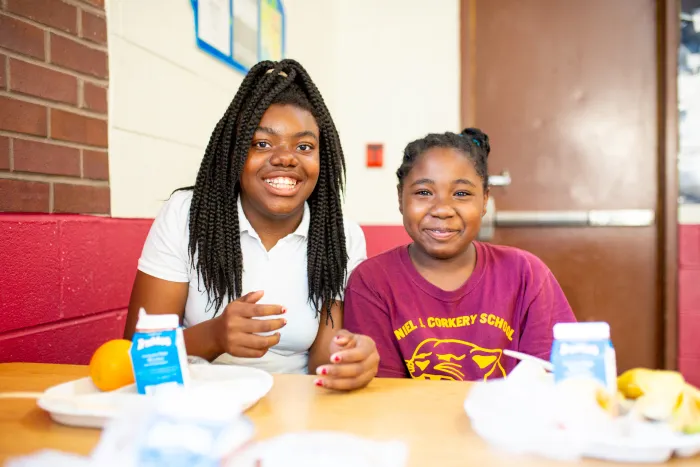
Research shows that free school meals help students learn and thrive, and children who are hungry find it hard to focus and learn. A free school meal program removes the stigma for students who receive free or reduced price meals, saves families money, eliminates school meal debt, and cuts bureaucratic red tape. Free school meals also play a key role in addressing hunger for all students - including children who are immigrants and refugees.
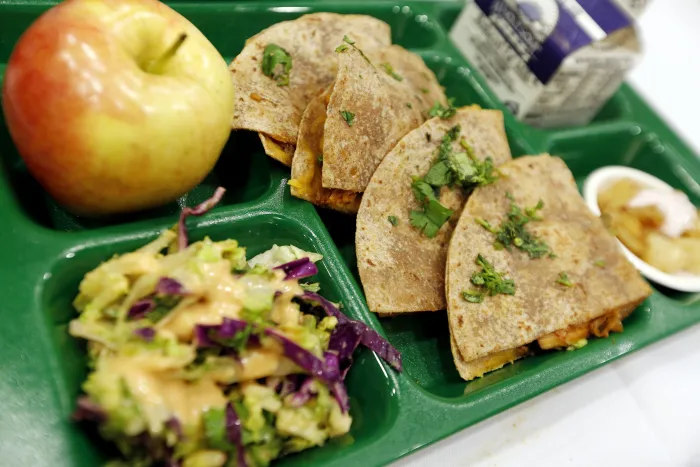
The Healthy School Meals for All coalition, including Healthy Schools Campaign, the Illinois Public Health Institute, the American Heart Association, anti-hunger advocates, health advocates, school unions, and many others are focused on continuing to build broad support across Illinois and raising their collective voices to tell Illinois lawmakers to fully fund a free breakfast and lunch for all Illinois students. The success of this campaign will benefit all districts, including those (like Chicago) that are already providing free meals through the Community Eligibility Provision. The additional funding will help cover their existing budget gaps and provide funds that can be put towards their own food service goals, including providing more fresh, less-processed, culturally responsive, and locally procured food items.
Kathryn Bernstein is a Program Director – Food Systems & Nutrition Policy at the Illinois Public Health Institute (IPHI), a statewide non-profit organization which collaborates to advance health justice through equitable policy, systems, and institutional change. Within her role at IPHI, Kathryn leads regional and statewide food and nutrition policy and systems change initiatives. This includes convening the Illinois Alliance to Promote Opportunities for Health (IAPOH) Food Systems and Nutrition Policy Workgroup, which houses Illinois’s Healthy School Meals for All coalition. Kathryn has her Master of Public Health in Nutrition from the University of North Carolina at Chapel Hill. She is also a registered and licensed dietitian.
Program Director, Food Systems & Nutrition Policy at the Illinois Public Health Institute
Sara Porter is the Vice President of External Affairs at Healthy Schools Campaign (HSC), a national nonprofit that works to ensure schools are places where students can learn and thrive. Sara has worked with HSC for over a decade, and has deep knowledge and expertise in the areas of school food and sustainability. She led HSC’s award-winning Cooking up Change program, a healthy cooking competition that challenged high school students to create healthy and delicious school meals, and leads HSC’s school food work with Chicago Public Schools. Sara also leads Healthy Green Schools & Colleges, HSC’s program that supports school districts in prioritizing sustainability and student health in their building operations and maintenance practices. Sara brings special skills in program and policy development, operations, training and partnerships. Sara joined HSC in 2008, and holds a bachelor’s degree from DePaul University.
Vice President of External Affairs at Healthy Schools Campaign
Donate to CSPI today
CSPI heavily relies on our grassroots donors to fuel our mission. Every donation—no matter how small—helps CSPI continue improving food access, removing harmful additives, strengthening food safety, conducting and reviewing research, and reforming food labeling. We don't take donations from corporations, and our flagship publication, Nutrition Action, doesn't run any ads. That means that everything we do is fiercely independent and unbiased from any bad actors, no matter how powerful. To help keep this online content 100% free, consider donating today to support CSPI.