CSPI’s 2026 Powerbuilding Partners: Co-creating an equitable food future
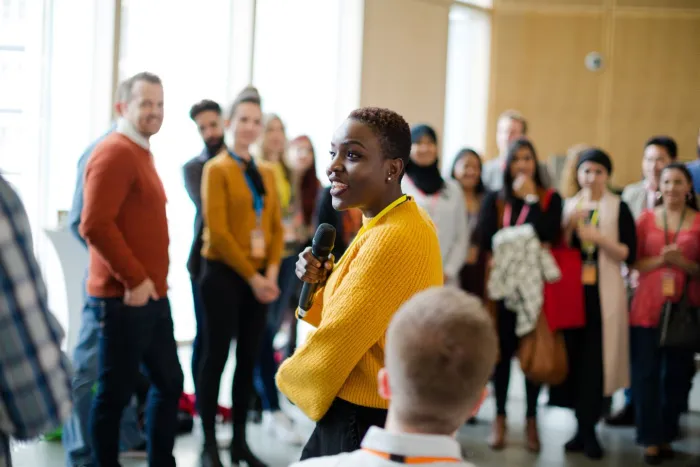
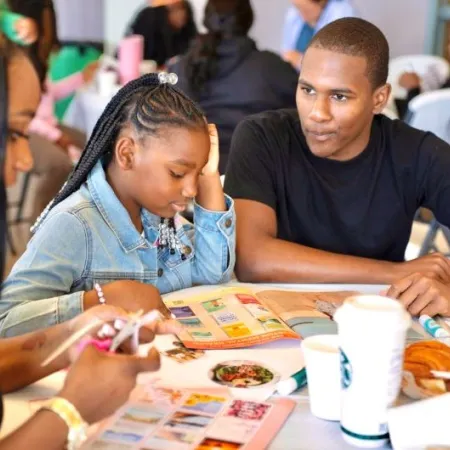
Lune V A/peopleimages.com - stock.adobe.com.
In the 2026 political landscape, there are urgent needs to build power for advocacy. For food and health advocates, this moment brings both urgent challenges and an unprecedented need for transformative action. Ongoing federal and state policy decisions, combined with the rapid spread of misinformation, threaten to significantly erode critical state and community resources. These pressures have been intensified by the past year’s sweeping federal cuts and disruptions to programs that support healthy school meals and essential nutrition assistance, including SNAP and its fruit and vegetable incentives funded through the Gus Schumacher Nutrition Incentive Program (GusNIP). Together, these factors risk driving food insecurity higher, weakening support for local farmers and economies, straining already overburdened state systems, and placing millions of families at heightened risk of hunger and financial instability.
This moment calls for conviction, and CSPI and our partners are rising to the challenge—prepared to respond strategically, create positive change, and to endure beyond the current year or administration.
Building power, meeting the moment
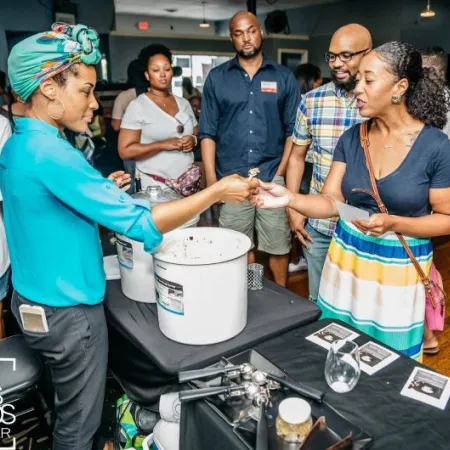
KOTO - stock.adobe.com.
In 2022, CSPI started the Powerbuilding Program, recognizing that the communities most impacted by food and nutrition policies are often not present in the creation of those policies —despite being crucialto their potential for impact, and ultimate success. The Powerbuilding Program was created to connect BIPOC-led community organizations with dedicated funding, technical assistance, and peer learning opportunities centered around policy advocacy and sustainability to bolster the power they already hold.
The goal is not to provide pre-packaged solutions, but to learn with and from the partners themselves, building a space to share strategies, stories, and lessons that reflect how power is built within real-world context. Learn more about CSPI’s Powerbuilding Program’s inception, launch, implementation, and lessons learned—including spotlights on our inaugural Powerbuilding cohort.
CSPI’s 2025-2026 Powerbuilding Program brings together a new cohort of community‑based partners for eight months of peer learning, skill‑sharing, and relationship‑building as part of CSPI’s Food Policy Catalyst initiative. In response to feedback from past cohorts, the theme of the 2025-2026 iteration of the Powerbuilding Program is organizational sustainability. This focus aims to support partners in navigating current and ongoing challenges, strengthening power within their organizations and broader communities, and acknowledging the critical role of state and local community leadership, whose advocacy shapes policy and demands accountability from industries impacting public health.
Through monthly sessions with peers, CSPI staff, and invited experts, participants move through a deliberate learning arc that builds strategic, relational, and narrative skills essential for community‑rooted policy advocacy and organizational sustainability. Over the course of the program, partners convene to develop capacity in organizing, coalition‑building, legislative engagement, organizational sustainability planning, and storytelling, culminating in a reflective process that sharpens a long‑term vision for advocacy.
Meet the organizations that make the 2025-2026 Powerbuilding cohort
Appetite for Change is a community-led nonprofit in North Minneapolis that uses food as a catalyst for equitable health, economic opportunity, and social change. Through programs like Community Cooks workshops and meal box distribution, urban agriculture, youth employment and leadership training, and food business incubation, AFC helps residents grow, prepare, and enjoy fresh, culturally relevant food while building skills and strengthening community bonds. The organization’s work is rooted in food justice and aims to dismantle systemic barriers to fresh food access and economic opportunity in historically underserved neighborhoods.
Black Child Development Institute - San Francisco (BCDI – SF), (a Village of the National Black Child Development Institute) is a Black-led, community-driven initiative launched in April 2025 in San Francisco under the fiscal sponsorship of the Children's Council of San Francisco to build leadership capacity and advance food justice, nutrition security, and equity for Black children, families, and educators. The organization’s vision is to become a fully independent 501(c)(3) within three to five years, grounded in culturally responsive community engagement and an intersectional approach to addressing overlapping oppressions related to race/ethnicity, gender identity, housing access, disabilities, and special needs. BCDI-SF is well positioned to drive change due to its trusted community relationships, experienced leadership, and intentional focus on developing grassroot advocacy skills to influence equitable food and nutrition policy.
Bigger Than Food Foundation (BTFF) was founded by Apollo Woods in October 2018, and since then, it has been focused on building a food system in Oklahoma where communities of color can shape their futures through equitable access to food, farming opportunities, and economic prosperity. This vision and its potential for positive change are reflected in the stories they share across platforms like their Bigger Than FoodYouTube channel and podcast. Through community‑led strategies in infrastructure, policy, and narrative change, BTFF advances economic opportunity, community empowerment, community gardening, rural agriculture, and local food distribution in ways that directly serve and strengthen BIPOC communities. Over the next five years, BTFF aims to expand farm operations, launch a commercial kitchen, create new jobs, and scale community‑driven programs like the Farm to Table Partnership and Growing for Good network - investments that will deepen local food access, strengthen economic opportunity, and position the organization as a catalyst for community‑led transformation.
Feed’em Freedom Foundation is a Black-led organization based in East Multnomah County, Oregon, advancing food sovereignty and health equity by supporting emerging Black farmers to grow, distribute, and sustain culturally significant ancestral foods. Using an intersectional, systems-level lens rooted in ancestral wisdom and regenerative science, the organization addresses interconnected issues of land access, economic exclusion, public health, and climate resilience through its food hub, farm-to-institution advocacy, and cooperative market models. From our perspective, Feed’em Freedom is uniquely positioned to drive lasting food system change due to its deep partnerships across public health, land justice, and policy networks, and its ability to translate community-based agricultural models into scalable, equity-centered systems solutions. Follow their Facebook page for the most recent updates!
Garfield Park Community Council is a resident-driven community development organization serving the East and West Garfield Park neighborhoods of Chicago. Founded through a local quality-of-life planning process and established as an independent nonprofit in 2012, GPCC focuses on housing stability, business development, wellness, and leadership programming. It partners with public, private, and philanthropic stakeholders to ensure that neighborhood residents are actively shaping local development, guiding investments, and advancing equitable opportunities for long-term community well-being.
Hand, Heart and Soul Project, Inc. (HHSP) in Clayton County, Georgia, strengthens community health by expanding access to nutritious food, early care and education supports, and neighborhood‑driven wellness programs. Centering equity for Black, Brown, Indigenous, and limited‑income families, they advance food sovereignty and economic opportunity through initiatives like their edible ECE learning garden, Little Lions Farm Stand, and strong policy engagement through local partnerships and active social media. With deep community trust, signature spaces for community connection like The Gathering, and local leadership development through their Community Champions program, HHSP is building powerful momentum for community‑led systems change.
Knock and Drop Iowa (KADI). In 2020, Zuli Garcia started Knock and Drop Iowa (KADI) as a small project to provide food and essentials to her community. Today, KADI has expanded to a nonprofit organization that is leading community-based action to improve the quality of life in Des Moines. In addition to operating the first and only Latino-led food pantry in Iowa, KADI delivers produce to households in need and provides health screenings and employment services. As a community-led organization with strong local partnerships, KADI is positioned to build a healthy and vibrant Latino community in Des Moines. Follow their Facebook page for the most recent updates!
Not Our Farm (NOF), is a farmworker-led organization addressing deeply rooted inequities in the U.S. food system by confronting the racist, colonial, and classist labor structures that continue to endanger and devalue farmworkers, particularly those who are BIPOC, Queer, and Trans. Through cultural organizing, worker-centered education, and farmworker-driven advocacy, NOF advances health equity by naming abuses normalized across small and large farms and creating accountability tools that shift consumer behavior, workplace standards, and public policy. NOF is uniquely positioned to drive systemic change by centering farmworker voices, using storytelling as an organizing strategy, and building pathways to translate lived experience into future policy and systems-level advocacy. Stay up to date on all they are doing by following them on Instagram!
Organized Uplifting Resources & Strategies (OURS) was founded by Commissioner Rev. Dr. ErNiko Brown to support and build historically underserved rural communities in McCormick County, South Carolina, a county with only one grocery store. On her own, Dr. Brown purchased and developed a 3-acre farm to create a sustainable local food source that also operates as a hub for education, community meals, youth programming, and cooperative economics. OURS is currently working to establish a food policy council for the county to bring together residents, farmers, faith leaders, youth, educators, healthcare workers, and local officials to create equitable policy recommendations. Follow their Facebook page for the most recent updates!
Reclamation FARMacy, founded and led by hometown advocate Shy Palmer, isbased in Southeast Raleigh and works to dismantle food injustice by empowering Black, Indigenous, and other communities of color through community‑led food production, education, and advocacy. Their mission centers on transforming food systems by confronting the systemic inequities that restrict access to land, healthy food, and decision‑making power. Through hands‑on programs in regenerative agriculture, seedkeeping, composting, food preservation, and culturally relevant crop production, they equip residents with the skills to move from food consumers to food system leaders. Their approach emphasizes community co‑design, multi‑organizational collaboration, and bridging grassroots organizing with regional policy networks to ensure local voices shape broader food system decisions. Partnerships and community connection are at the center of their model for impact, and result in their organization’s strong potential to integrate food access with aligned community spaces, being inclusive of preventive health education, physical wellness, and intergenerational learning. As they grow, Reclamation FARMacy aims to deepen their policy advocacy capacity, expand coalition‑building, and train neighborhood leaders to participate directly in food policy conversations.
While our relationships with each of these organizations have only just begun, we can say with certainty: this cohort is not only building skills and strategies, they’re building lasting power, rooted in community wisdom and a shared commitment to shaping a more just and equitable food system.
Act now to support our shared journey
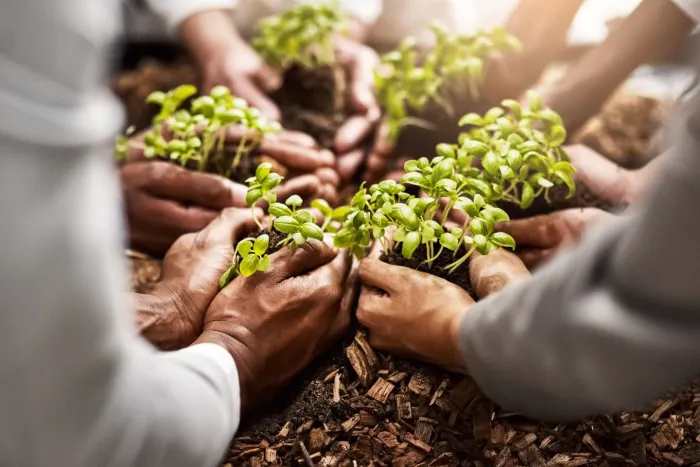
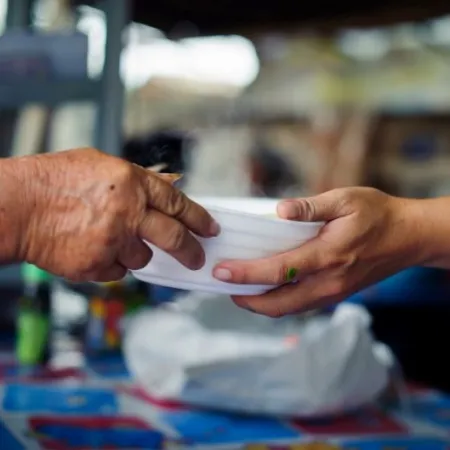
BestCam/peopleimages.com - stock.adobe.com.
Learn more about Powerbuilding at CSPI. Explore CSPI’s Powerbuilding Program through our dedicated landing page: Powerbuilding Program: Grassroots stories and food systems change | Center for Science in the Public Interest This resource offers a deeper look at the program’s original framework, theory of change, past partners, and the themes and lessons guiding this work, along with clear opportunities to take action and support community‑driven powerbuilding efforts.
Follow our partners. Ultimately, those in this work honor the incredible truth that nobody sustains a movement alone - and that lasting change grows from shared commitment, mutual support, and the power of many voices moving in the same direction. Visit the section above (“Meet the organizations”) for links to stay connected with CSPI’s Powerbuilding partners, to follow their ongoing work, and to support the powerful movement they’re advancing together.
Join CSPI’S capacity building network. Follow CSPI’s Resource Hub to stay connected to open-access skill‑building trainings, policy toolkits, and equity‑centered conversations designed to strengthen the advocacy capacity of everyone working toward a fairer food and health landscape.
Connect with our team. If you’re interested in supporting the Powerbuilding Program or its partners, or if you’d like to explore what powerbuilding could look like within your own organization, we welcome you to connect with our team to continue the conversation (iblake@cspi.org or bwilliams@cspi.org).
Bethany (she/her/hers) manages CSPI’s relationships with state and local partners in the Southern region, providing guidance around equitable community engagement in food policy work and organizational power building. In addition to her role with CSPI’s partner network, including current and potential subgrantees, Bethany leads the Engagement Team’s efforts in internal capacity building to guide CSPI practices in community engagement across research, policy, advocacy, and cross-cutting issue areas. Through her work, Bethany contributes to CSPI’s missions of inclusivity, openness, accountability, kindness, and collaboration, with a strong skillset and passion to center the voices of those most impacted by food system inequities.
CSPI heavily relies on our grassroots donors to fuel our mission. Every donation—no matter how small—helps CSPI continue improving food access, removing harmful additives, strengthening food safety, conducting and reviewing research, and reforming food labeling. We don't take donations from corporations, and our flagship publication, Nutrition Action, doesn't run any ads. That means that everything we do is fiercely independent and unbiased from any bad actors, no matter how powerful. To help keep this online content 100% free, consider donating today to support CSPI.