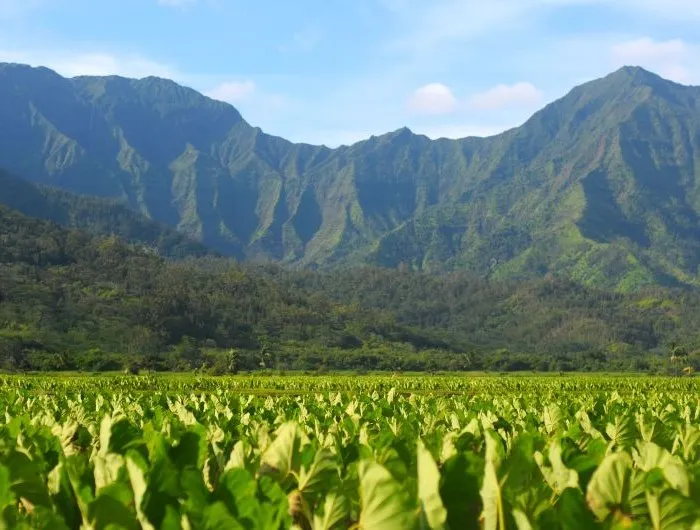
Across Hawaiʻi, local farmers work tirelessly to grow the food that sustains our islands. Yet, many of them struggle to keep their farms afloat, just as thousands of families face barriers to putting nutritious food on their dining room tables each day.
The Hawaiʻi Public Health Institute (HIPHI) is working to change that by advancing Farm to Food Bank, a statewide program that provides funding for food banks to purchase food directly from Hawaiʻi farmers. With support from CSPI, HIPHI is strengthening connections between Hawaiʻi’s local farmers and food banks so community-grown produce reaches the people who need it most.
Every new farmer relationship helps us feed more families and brings us closer to food security. — Lauren Nelson, Maui County Food Access Coordinator
Connecting local farms to families in need
HIPHI is a statewide nonprofit advancing health equity and resilience across Hawaiʻi. From tobacco prevention to economic resilience to hunger action, our work focuses on building sustainable communities in which local families are not just surviving. They are thriving.
Improving food systems is a cornerstone of that mission. Hawaiʻi currently imports 80–90% of its food, leaving the islands vulnerable to supply disruptions and price shocks. Strengthening local food production—and ensuring equitable access to locally-grown nutrition—is both an agricultural and a public health imperative.
From Farm to Food Bank: Listening across the Islands
Through the CSPI grant, HIPHI set out to better understand how the Farm to Food Bank initiative operates in every county. Our team visited farms, food banks, and gleaning programs on Maui, and Hawaiʻi Island, learning directly from the people who make the program work in and for their communities.
Each island has unique strengths and challenges:
- Maui: At Okoʻa Farms, we heard from farmers struggling with high land costs and administrative hurdles. The Maui Food Bank—which distributes nearly a million pounds of produce a year—is planning a larger facility to better serve residents on Maui, Molokaʻi, and Lānaʻi. They are engaging with new local farms, including more rural areas, in order to strengthen the farm to food bank supply chain.
- Hawaiʻi Island: The Food Basket, Hawaiʻi Island’s food bank, has long integrated Farm to Food Bank principles, purchasing directly from farmers at fair market value. Its DA BOX program, a community supported agriculture initiative, helps small farmers build consistent income while offering affordable boxes of local produce to families statewide. The Family Farm is one of The Food Basket’s largest suppliers and its farmers value the consistent, fair-market purchasing relationship that supports their commitment to feeding the community. At the same time, there are persistent barriers facing small farmers, including land affordability, high labor costs for organic production, and a shrinking pipeline of younger farmers. Kōkua Harvest is a gleaning program that rescues tens of thousands of pounds of fruit and vegetables that might otherwise go to waste and distributes it throughout the community. In 2023, it nearly doubled its harvest, showing the power of small, community-driven efforts to advance food security.
Everywhere we went, we heard a consistent message: farmers want to feed their communities. To do that sustainably, however, they need fair compensation, land security, and better infrastructure, such as cold storage for perishable goods.
Turning local insights into statewide action
HIPHI then translated on-the-ground insights into concrete policy change. Our goal was to establish a permanent, statewide Farm to Food Bank program that provides farmers with fair pay and expands access to healthy foods for Hawaiʻi families.
We reviewed models from 17 other states and identified best practices to adapt to our islands’ unique context. Our advocacy efforts included convening food banks, farmers, non-governmental organizations, and policymakers to collaborate on Farm to Food Bank legislation, creating educational materials to highlight the benefits of Farm to Food Bank programs, and crafting a campaign that prioritized the experiences of agricultural leaders and working families in working to end local hunger.
Food banks need more freezer and refrigerator storage, and the warehouses need to be larger to serve more people. They also face significantly higher local produce costs compared to what they can source from other states, making it more challenging to purchase from local farmers. Ultimately, farmers want to give back to their communities, but they can’t afford to if they can’t cover their costs. Policies like Farm to Food Bank can help bridge that gap.
A winning vision for food security and health equity
The Farm to Food Bank program embodies HIPHI’s mission to advance equitable health outcomes. Food insecurity in Hawaiʻi is deeply tied to economic and agricultural systems. By investing in local farms, we’re investing in community health. This work also aligns with CSPI’s commitment to healthy food access, food system improvement, and sustainable food policy nationwide. Together, we’re showing how local innovation can inspire broader change.
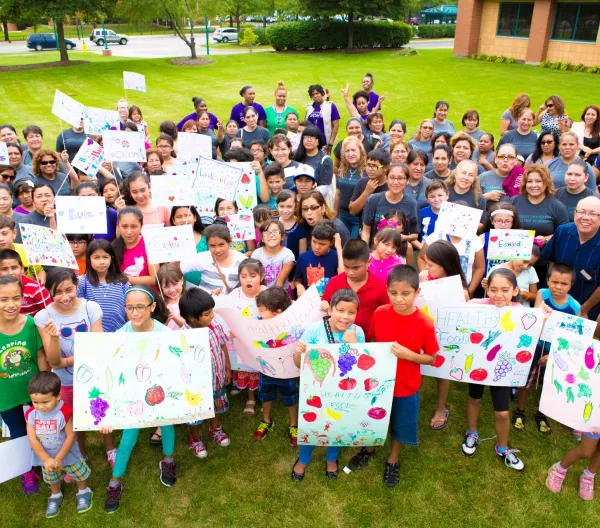
At the heart of this effort are the people—farmers, volunteers, and families—who make up Hawaiʻi’s food system. By elevating diverse voices, we successfully ensured that the policies we promoted reflected community wisdom and linked those who sustain our food system with their most vulnerable neighbors. These relationships don’t just fill plates; they build resilience, dignity, and connection.
In 2025, these efforts generated a significant victory: House Bill 300, the operating budget for the state’s executive branch, directed $500,000 per year for the next two years to Hawaiʻi’s Farm to Food Bank program. This funding will be used by food banks to purchase fresh, local, and culturally relevant food directly from Hawaiʻi farmers to distribute to households that need it most, reducing food insecurity across Hawaiʻi’s shores.
Hopefully, future efforts will build on this historic achievement by increasing investment in the program and related anti-hunger initiatives. By bridging local farms and working families, we’re not just feeding people; we’re cultivating a stronger, more regenerative future for our island home.