iiierlok_xolms (icons), Marevgenna (syringe), Anna Hoychuk (vials) - stock.adobe.com.
Peptides have become the latest obsession on Instagram, TikTok, and YouTube, where influencers rave about injectable “stacks” that promise fat loss, faster recovery, better sleep, and glowing skin. But outside of a few FDA‑approved drugs, most peptides live in an under-regulated marketplace—one where scientific evidence is thin, safety is uncertain, and access is surprisingly easy.
What are peptides?
Peptides are short chains of amino acids (the building blocks of proteins) that act as messengers with specific instructions for the cells that they bind to. For example, insulin tells your cells to absorb glucose. Ghrelin, leptin, and glucagon-like peptide-1 (GLP-1) help manage hunger or appetite. And vasopressin tells the kidneys and blood vessels to raise blood pressure.
Insulin—the first peptide made in a lab—has been saving the lives of people with diabetes for more than a century. And GLP-1 peptide drugs like semaglutide (Ozempic and Wegovy) and tirzepatide (Mounjaro and Zepbound) have undergone extensive testing in clinical trials to become FDA-approved drugs for obesity and type 2 diabetes.
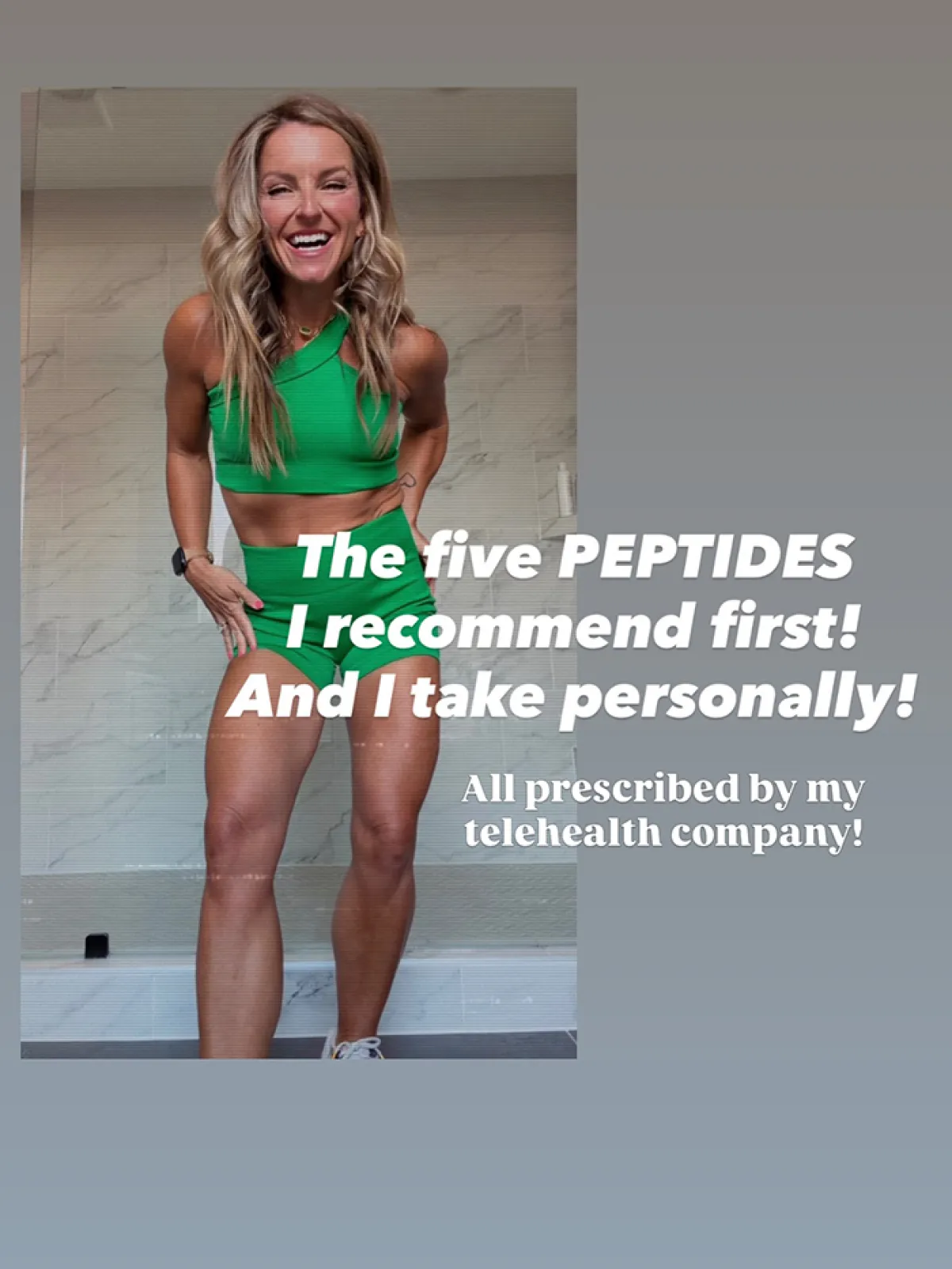
But when an Instagram influencer recommends combining a handful of peptides into a “stack” to get a “steadier appetite” along with “less fatigue from cognitive stress” or to speed up injury recovery while “promoting a natural glow,” they’re not talking about FDA-approved drugs. Welcome to the largely unregulated Wild West of injectable peptides. (While peptides can also be packaged as pills, nasal sprays, patches, or creams, injections are the main focus of the DIY wellness clinic that social media has become.)
Want a peptide? Social media influencers are eager to help you choose…and maybe even point you to their telehealth company to get your prescription.
rooted_and_strong – Instagram.com.
Why have peptides become so popular?
If you spend time in the health and wellness corners of social media, peptide chatter is impossible to avoid. But just a few years ago, unless you were a bodybuilder, you had probably never heard of peptides. What changed?
“With the introduction of the GLP-1 drugs, the stigma of injecting oneself at home has kind of disappeared,” suggests Alexander Weber, an orthopedic surgeon and chief of sports medicine and shoulder surgery at Keck Medicine at the University of Southern California. “The barrier to entry is much lower than it once was.”
Clearly, peptides have entered the mainstream. “I live in LA and I treat everyone from the high school athlete to 70- and 80-year-olds who want to play pickleball five times a week and recover faster,” says Weber.
How often do his patients ask about peptides? “Every day.”
How are peptides sold?
Scroll social media and you’ll find endless tutorials on what to take, how much to take, and when to take it. But if the peptides that are being touted aren’t FDA‑approved drugs, how are so many people getting them?
I decided to find out for myself. I wanted to know how hard it is for an average consumer to buy peptides and whether any guardrails exist. The answers: not hard…and barely.
A Google search for “where to buy peptides” reveals a sprawling marketplace. The sellers fall into three main buckets:
International manufacturers who sell peptides at low prices with little or no oversight
Research‑chemical sellers who sell peptides that are labeled with a disclaimer like “not for human use”
Concierge clinics or telehealth platforms that dole out prescriptions for peptides made by compounding pharmacies
In practice, the lines between the three categories can blur.
International peptides
The least-regulated route is buying from international sellers, who are often based in China. As reported in New York Magazine, this approach typically involves connecting through encrypted messaging apps like Discord or WhatsApp with a middleman who coordinates the purchase. In other cases, buyers work directly with a supplier. The appeal is obvious: Peptides that can cost hundreds of dollars per vial cost a fraction as much. I didn’t explore this option.
Peptides ‘for research use’
Some peptide sellers claim that their products are for research use only. But you don’t have to prove that you are using them for research to buy them.
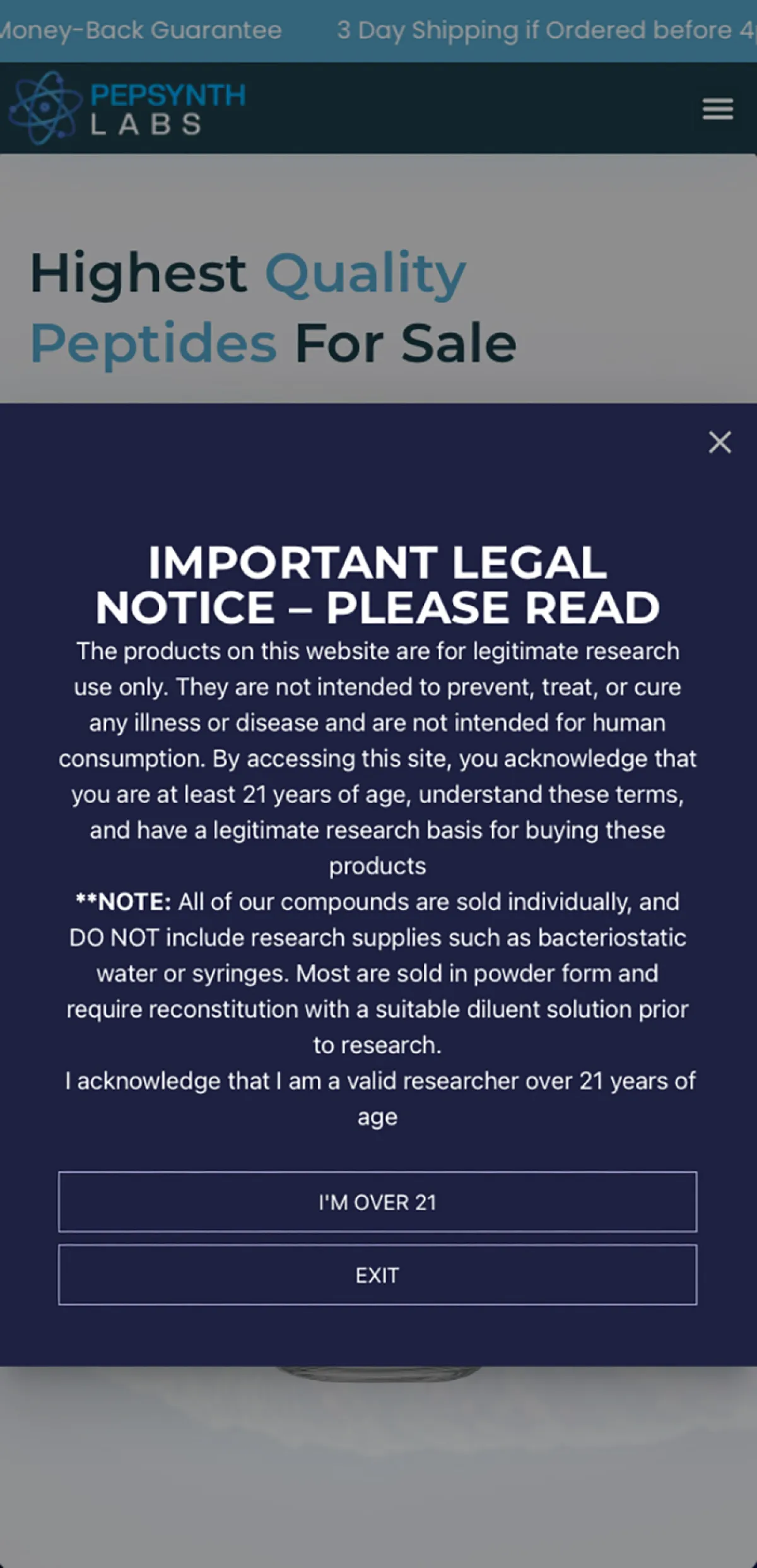
pepsynthlabs.com.
Another common route is buying peptides that are marketed “for research use only,” a loophole that allows anyone with an internet connection and a credit card to purchase them.
On one site, this pop-up appeared: “The products on this website are for legitimate research use only…By accessing this site, you acknowledge that you are at least 21 years of age, understand these terms, and have a legitimate research basis for buying these products.” After I clicked the “I’m over 21” button—a digital pinky promise— the company’s full peptide catalog was at my disposal. No proof of research purpose (or age, for that matter) required.
But just because you can buy something online doesn’t mean it’s being sold legally. “A mere disclaimer that something is for research use only when the evidence suggests that the chemical isn’t just being used for research would probably not be particularly persuasive from a legal standpoint,” says Patti Zettler, an expert on food and drug law and the John W. Bricker Professor of Law at Ohio State University.
So even though the FDA isn’t often cracking down on peptides sold “for research use,” don’t assume that it’s a legal business model. “It's just an area in which there hasn’t been much enforcement,” says Zettler. That’s no surprise. The FDA’s resources for enforcement are scarce. And HHS Secretary Robert F. Kennedy Jr. is an outspoken fan of peptides. (His department oversees the FDA.)
But FDA does take action occasionally. In 2024, for example, the FDA sent a warning letter to peptide seller Swiss Chems, noting that the “for research use” approach wasn’t fooling them. The agency noted that Swiss Chems was illegally selling the GLP-1 drugs, semaglutide and retatrutide (which is currently being studied and is not an FDA-approved drug). “Despite statements on your product labeling marketing your products as ‘research chemicals only,’ evidence obtained from your website establishes that your products are intended to be drugs for human use,” the agency wrote. Swiss Chems is no longer selling semaglutide or retatrutide, though it still sells peptides for research purposes. Swiss Chems’ “products are exclusively intended for research purposes,” says their FAQ page. “We strongly discourage any form of personal use.”
Prescription peptides
Medspas, concierge wellness clinics, and telehealth companies offer a more medical‑esque pathway. They typically prescribe peptides that are made by compounding pharmacies, among other services. (Despite the name, most medspas aren’t affiliated with a medical practice.)
Compounding pharmacies—which create customized formulas of drugs for individual patients—are a small but vital part of the healthcare system. “The classic example is a patient who has an allergy to an inactive ingredient in an approved drug and needs a version of the drug without that allergen,” says Zettler. “A compounding pharmacy will create that specific version for that patient.” (Another type of compounding pharmacy produces large batches of drugs, typically when there is a drug shortage.)
“A product can’t be legally compounded unless it’s a component of an FDA-approved drug or the FDA puts it on its ‘permissible for compounding’ list,” explains Zettler.
Only a few of the popular peptides meet the first requirement and none meet the second.
Many peptides sat on a list awaiting review for years. During that time, the FDA used “enforcement discretion,” meaning it generally didn’t crack down on sellers while the peptides were being evaluated. That changed in 2023, when the FDA determined that 19 peptides posed “significant safety risks” and moved them to a de facto “do not compound” list.
Peptides that can be compounded (with a prescription) include FDA-approved drugs. Of the social media star peptides, only two—tesamorelin and sermorelin—can be legally compounded. Tesamorelin is approved for helping people with HIV lose abdominal fat. Sermorelin was approved for treating growth hormone deficiency in children, though the manufacturer pulled it from the market in 2008 for commercial—not safety—reasons. But both can be prescribed for other “off-label” uses.
How I bought peptides
To buy peptides, I looked at two options.
Legally suspect: I went through the site of a popular self-proclaimed “biohacker” that had a handful of peptides on offer (far fewer than most research-use-only websites). I added a vial of CJC-1295 + Ipamorelin ($350) to my cart—to “enhance longevity,” “support optimal metabolism,” and “boost energy and vitality”—and headed to check out. I had to confirm that I’d read a liability disclaimer, which stated that the peptides were “provided exclusively for in vitro laboratory research purposes.”
But the print below the “place order” button noted that I first needed to complete a “complimentary required medical screening.” Umm… Was I getting “research” peptides or a prescription? (After some digging, it appeared that the peptide would be shipped from a compounding pharmacy.)
The screening included a dozen or so questions about my basic medical history (like if I had cardiovascular disease, cancer, allergies, or psychiatric illness). Once that was done, I was connected to a provider who asked the same questions, then told me that she would approve my order. The call lasted less than 90 seconds, and there was no opportunity for me to ask, for example, about the purity of what I’d be getting or who to contact in case I had any other questions.
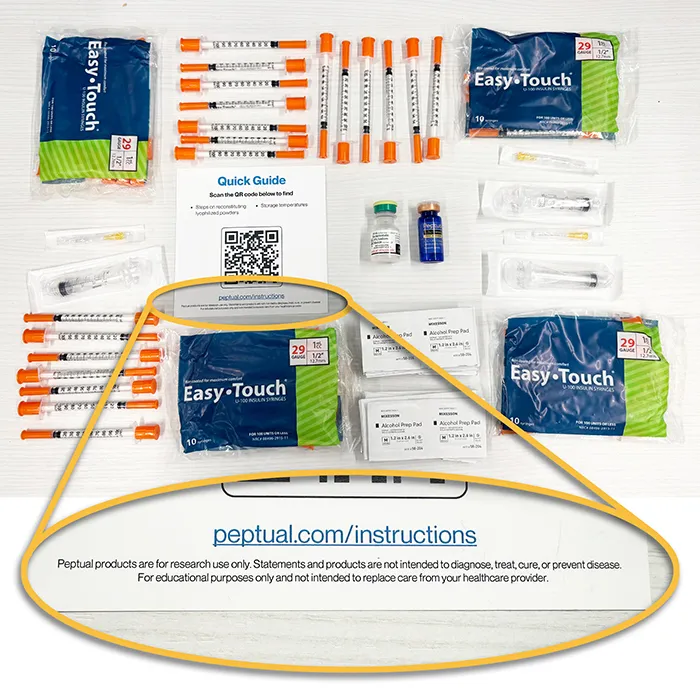
A vial of peptides, sterile water (to mix with the peptides), syringes, needles, and instructions on how to inject the peptides were delivered to me, accompanied by very fine print indicating that the peptides are “for research use only.”
Marlena Koch – CSPI.
Legal: I chose the top result of my “Where to get sermorelin?” Google search, which required me to fill out a lengthy medical history and complete a telehealth appointment with a provider. If approved, I’d be charged $149 monthly for sermorelin, which the company promotes to “boost energy, lean muscle mass, and strength.”
While the telehealth appointment lasted only 5 minutes, I was given the opportunity to ask questions. What does the company do to ensure the purity of the peptides it sells? They only partner with “FDA pharmacies,” the provider told me, and she gave me the name of the pharmacy that would be compounding my peptides. (Note: It’s not clear what she meant by “FDA pharmacies.” The type of compounding pharmacy that the company uses is regulated by state boards of pharmacy, not the FDA.) As far as safety was concerned, the provider told me that people with cancer or who are breastfeeding shouldn’t take peptides, and that I might have some soreness at the injection site.
Neither the legally suspect nor the legal option came close to the level of medical care I receive from my primary care provider, but the difference between the two was stark. In the second case, questions were welcomed and answered. I also received a follow-up email with directions for how to store my peptides, tutorial videos on how to use them, and directions for how to dispose of the spent vials. In the first (legally suspect) case, medical oversight was delivered with what felt like a wink and a nudge.
But in both cases, the peptides weren’t recommended to me because my provider thought they would serve me well. The mere fact that I wanted them—I was never asked why—and had the money to buy them was really all that mattered.
And, no, I never injected myself with the peptides. (Keep reading to find out why.)
Are peptides effective?
“If you look online or on social media, you would think we’re flush with excellent research that shows that these injectables are going to prevent the need for surgery or promote healing,” says Weber. Ditto for claims that peptides can help with focus, weight loss, energy, sleep, wrinkles, and more.
Case in point: “Our clinicians are all trained,” says the Instagram video of one “personalized wellness” concierge health company. “They understand the peptides, how they work, and they also know how to combine those peptides together to even get you more synergy and get you better, quicker, faster results.”
Truth is, “we’re at ground zero,” says Weber. “Even basic questions like dosage and frequency still need to be determined.” For example:
Peptides for muscle growth
One of the most popular reasons to take peptides is to build muscle and burn fat. Enter peptides like CJC-1295, ipamorelin, tesamorelin, and sermorelin, which all facilitate the body’s release of growth hormone from the pituitary gland.
But there’s no evidence that those (or other) growth-hormone-related peptides live up to influencers’ claims of “better muscle retention” or that they’ll help “melt belly fat” or make you “fuller, tighter, and leaner.”
CJC-1295 and ipamorelin are often combined into one vial (like the one I purchased). Yet no clinical trials have ever tested ipamorelin, let alone the combination, for losing fat or gaining muscle. (A preliminary trial of CJC-1295 was halted early after a study volunteer died of a heart attack.)
Healing and repair peptides
Don’t trust the peptide claims you see on social media. Nearly all peptides lack rigorous scientific evidence to support the influencers’ hype.
kinnickhealth – Instagram.com.
They call it the “Wolverine Stack”: BPC-157 (Body Protection Compound-157) and TB-500 (Thymosin Beta-500). The two, taken together, help treat injuries and boost recovery, claim the influencers.
“Anecdotally, patients report that the BPC-157/TB-500 combination is effective,” says Weber, who is an orthopedic surgeon. “For a lot of folks, anecdotal evidence seems to be enough.”
The scientific evidence tells a different story. While animal models suggest that BPC-157 can help heal everything from ulcers, wounds, and burns to ligament, tendon, and muscle injuries, randomized trial evidence is nowhere to be found.
In one non-randomized study, researchers phoned 12 people who had previously had BPC-157 injected into their knees and asked how they felt. Eleven reported that their pain had improved. But there was no comparison group, the time between injection and follow-up wasn’t standardized, the authors didn’t report how much the patients’ pain had improved, and the patients didn’t even suffer from the same kind of knee pain.
As for TB-500, there are no published peer-reviewed trials in humans.
Are peptides safe?
Maybe. Maybe not. “I would break it down into two main categories of safety concerns,” says Weber.
Purity and potency
Quality is a major concern. “You could get 100 or 99 percent pure peptides,” says Weber. Or there could be no peptides at all in your vial. Or what you received could be contaminated.
In January, New York Magazine reported that 30 percent of the peptides one company tested were “either mislabeled, under- or overdosed, or contaminated with toxins or foreign bacteria.”
“That’s part of why we have a regulator like FDA,” Zettler points out. “Because we as consumers can’t look at a product and know if it has what it says it has in it. Is it pure? Does it have contaminants? We can't tell that.”
Peptides prescribed by a healthcare provider and mixed by a compounding pharmacy are likely the safest bet, though that’s still no guarantee. “There isn’t rigorous oversight of each pharmacy,” says Weber. One study found that compounded drugs were responsible for 45 percent of drug recalls in the US between 2012 and 2021, despite accounting for just 1 to 3 percent of prescriptions.
Other health risks
When the FDA declared that 19 peptides were not fit for compounding in 2023, the agency largely cited safety risks. For example, peptides, especially when injected, may trigger severe immune responses.
In a 2024 review of three peptides, the FDA noted side effects like increased heart rate, chest tightening, headache, nausea, diarrhea, and elevated liver enzymes, as well as skin irritation and pain at the injection site.
In 2025, two women were hospitalized after receiving peptide injections at an anti-aging conference in Las Vegas. Both experienced increased heart rate, trouble breathing, and swollen tongues. (It’s not clear if the peptides were responsible for the symptoms.)
Considering the skin-darkening peptide melanotan II (sometimes called the “Barbie peptide”)? Risks include melanoma (skin cancer) and long, painful erections, says the FDA.
And peptides like BPC-157 may result in the growth of more blood vessels, which could be a red flag. “Are we creating growth, not just for our healthy cells, but also for tumor cells that we don’t know we have?” asks Weber.
The future of peptides
In April, the FDA announced that it will hold a meeting in July to consider whether seven peptides should be moved to the list of products that can be compounded. Five more peptides are slated for review next February. The shift appears driven by politics rather than new scientific evidence: Robert F. Kennedy Jr. has publicly supported peptides, even writing on X in 2024 that he would move to end the FDA’s “war” against the compounds.
But allowing the peptides—which include BPC-157 and TB-500—to be compounded isn’t the same as approving them as drugs. It simply gives compounding pharmacies the green light to prepare the peptides—something many already do (with little fear that the FDA has any interest in cracking down on them).
Some argue that allowing peptides to be compounded will ensure a safer peptide supply. Zettler is not so sure. “There’s no better evidence now than before the FDA made its announcement that peptides have any of the claimed effects, we don't know what they do, and there are still all the concerns about compounding pharmacies complying with good manufacturing practices that already exist,” she says.
The FDA may also let manufacturers sell peptide pills as dietary supplements. CSPI has argued that move would threaten the public’s health because the FDA doesn't review supplements for safety or effectiveness before they hit the market.So peptide pills would be susceptible to issues that already plague the supplement aisle—like poor quality, contamination, safety concerns, and unverified claims.
It also seems unlikely that we’re on the cusp of a windfall of high-quality studies testing the safety and efficacy of peptides. Why? FDA’s new approach will likely undermine the incentive for those pushing peptides to study them in randomized trials and get them approved. (And even if they were approved, pharmaceutical companies would shy away from them for fear of being undercut by compounding pharmacies.)
“If companies can sell them and make lots of money without having to prove that they do what they’re claimed to do, why wouldn’t they?” Zettler points out.
Would you pay millions of dollars to test something that already makes you millions of dollars?
CSPI heavily relies on our grassroots donors to fuel our mission. Every donation—no matter how small—helps CSPI continue improving food access, removing harmful additives, strengthening food safety, conducting and reviewing research, and reforming food labeling. We don't take donations from corporations, and our flagship publication, Nutrition Action, doesn't run any ads. That means that everything we do is fiercely independent and unbiased from any bad actors, no matter how powerful. To help keep this online content 100% free, consider donating today to support CSPI.
Our free Healthy Tips newsletter offers a peek at what Nutrition Action subscribers get—healthy recipes, scrupulously researched advice about food of all kinds, staying healthy with diet and exercise, and more.