Black food sovereignty in Oklahoma: How land, restaurants, and community power are empowering the future of NEOKC
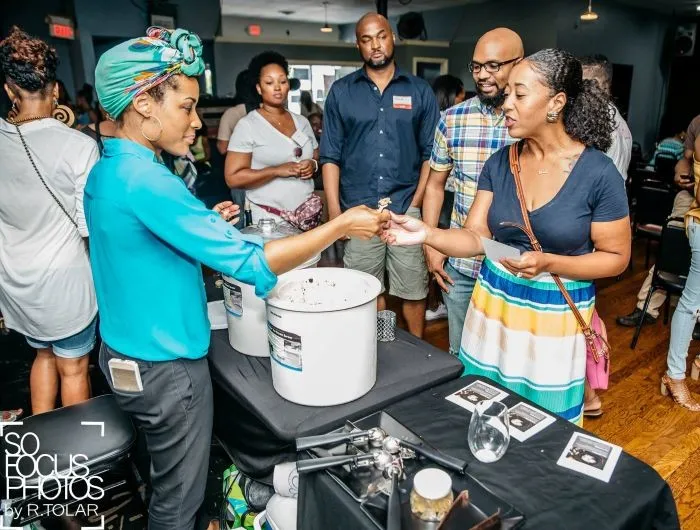
R.Tolar - So Focus Photos.
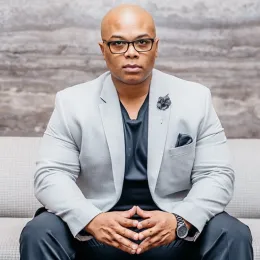
In Oklahoma City, Black residents are rebuilding control over land, food, and local commerce in ways that challenge how the state thinks about economic development and public health. At the center of this work is Apollo Woods, a revenue strategist and cultural entrepreneur whose projects are creating a blueprint for Black food sovereignty that any city can study and support. Join our Resource Hub event, "From Seed to System: Black-Led Strategies for Food, Farming, and Community Wealth," on Mar. 25, 2026, where Woods will participate as a panelist.
Black food sovereignty is the right of Black communities to define and control their entire food system, from land and production to distribution, retail, and policy. It is about who owns the farm, who signs the restaurant lease, who gets the loan, and who sits at the table where public dollars are allocated. In Oklahoma, that question carries specific historical weight.
Apollo Woods.
From Black towns and farmland to food apartheid
Oklahoma was once home to 50 Black settlement towns where land ownership, local government, and commerce were tools of self-determination. Over the 20th century, Black farmers in Oklahoma and across the South lost millions of acres of land through discrimination in credit and farm programs, heirs' property laws that made it easy to force partition sales, and local practices that made it difficult for Black families to buy or hold onto property near white communities. The decline of Black land ownership not only erased wealth, it also weakened control over how food was grown, sold, and priced in Black neighborhoods.
Between two worlds: A Duncan family's story of desegregation
The Hill that my family knew in the 1940s was a self-sufficient community where Black entrepreneurship succeeded despite segregation's constraints. Those three grocery stores, the mechanics, the car dealership, the restaurants and clothing shops, and especially the Black Hotel listed in the Green Book represented pride, resilience, and economic independence. Built in 1938, Douglass School was the lifeline of The Hill, between Bois D'Arc and Sycamore on Second Street, serving as both an educational institution and a symbol of what The Hill had built for itself.
A legacy of transition
My uncles stood at the crossroads of two eras: one brother closing a chapter on a segregated but tightly knit community, the other opening a new chapter filled with both promise and challenge. Their experiences, separated by just a few years but worlds apart in what they faced each school day, embody the complex legacy of desegregation. It doesn't stop there because my uncles became the protectors of 10 more siblings who would live in Jim Crow 2.0. A story of progress that came with the bittersweet cost of losing something precious that The Hill had built for itself.
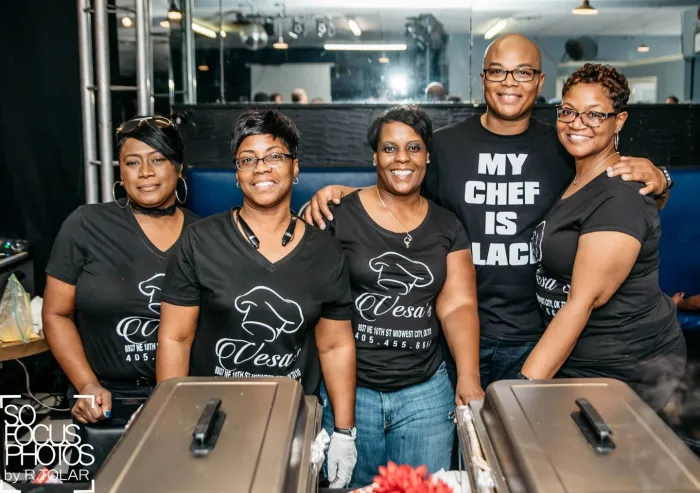
R.Tolar - So Focus Photos.
OKC Black Eats and the economics of where we eat
As agriculture consolidated and urban renewal projects reshaped cities, Black neighborhoods in Oklahoma City experienced disinvestment in grocery infrastructure. The outcome is what many organizers now call food apartheid. Supermarkets are scarce in Black neighborhoods. Nutrition-related diseases are high. Black residents routinely spend food dollars in areas where they have little political voice and no ownership stake in the retail landscape.
The story of Black food sovereignty in Oklahoma is not a story of starting from zero. It is a story of repair. Rebuilding land-based power and local supply chains in communities like Clearview, Summit, Boley, and Tatums that already know what it means to be self-sufficient but have been boxed out of the modern economy.
Apollo Woods stepped into this work first through OKC Black Eats, a media and consulting platform that began with a simple idea: help people find and support Black-owned restaurants in Oklahoma City. That idea quickly became an economic roadmap.
Through guides, curated brunch events, and partnerships with civic organizations like Visit OKC and the Oklahoma City Thunder, OKC Black Eats has directed significant spending to Black-owned restaurants, chefs, and food trucks. Black Restaurant Bingo, which engages residents in visiting a mapped set of Black-owned restaurants, demonstrates how consumer campaigns can influence both revenue and visibility. Participating restaurants gain new guests, press coverage, and social proof that helps when negotiating leases or seeking financing.
These efforts have also produced an important data story. They show that when residents are equipped with information and a nudge, they will move real dollars toward Black-owned businesses. That spending then circulates through wages, vendor payments, employment, and local sponsorships in Black neighborhoods. For corporate partners and public agencies interested in measurable impact, this is a test case in how culture-focused campaigns can function as neighborhood-level economic policy.
Black Restaurant Bingo shows how a simple idea can redirect spending toward restaurants often overshadowed by hospitality groups with larger marketing budgets. Each February, the campaign invites residents and visitors to pick up or download a bingo card that lists Black-owned restaurants across the metro. Diners earn a square by ordering from a participating business and saving a receipt or photo. Completed rows or full cards qualify for prizes from partners, with the Oklahoma City Thunder serving as presenting sponsor. In 2024, the campaign amplified through more social channels.
On the surface, it feels like a citywide game centered on good food. Beneath that surface, it acts as an economic development tool. The campaign grew into a month-long celebration that typically features about 13 restaurants and generates around $250,000 in direct customer spending during February, with hundreds of thousands of digital impressions each year. Restaurant owners report new regulars, increased catering inquiries, and notable traffic on days that were previously quiet. Public feedback thanks the campaign for changing the culture around how residents discover and support Black-owned restaurants, and travel writers now point visitors to Black Restaurant Bingo as one of the best ways to experience Black-owned restaurants in the metro.
For corporate partners, Black Restaurant Bingo delivers a clear package: a defined timeframe, visible community engagement, trackable spending, and brand presence at the center of a positive citywide story about food and equity. A bingo card turned into $250,000 in one month for local Black-owned restaurants. That is policy you can taste.
Since 2018, restaurant campaigns and cultural food events connected to Apollo's work have generated an estimated $1.9 million in direct spending for the Oklahoma City metro economy. Through those efforts, more than 200 entrepreneurs have been supported with supplier connections, corporate referrals, and access to contract opportunities that would have been unreachable without this ecosystem.
For the Culture at Paycom Center and the politics of who gets the prime location
The For the Culture campaign extends this logic into one of the most visible venues in the state, Paycom Center. By working with city partners to bring the first Black-owned restaurant concept into the arena, Apollo challenged a longstanding pattern. Major sports venues often operate as closed ecosystems where concession contracts go to a familiar circle of vendors and national brands.
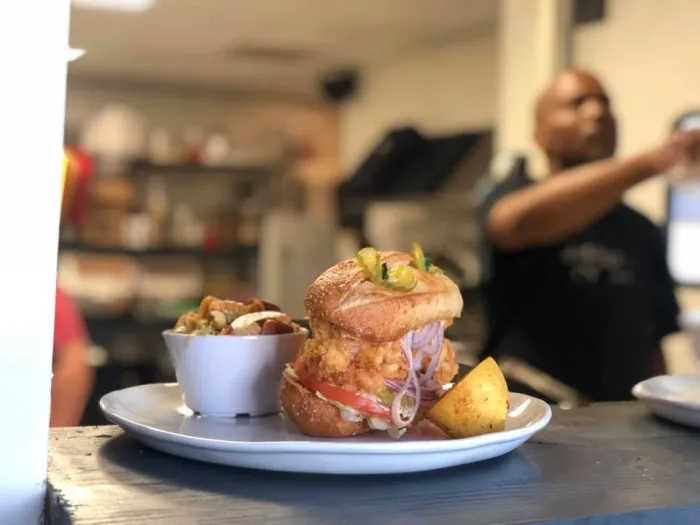
Creating a pathway for a Black-owned restaurant to operate inside the arena did more than celebrate a single business. It demonstrated that Black chefs and restaurateurs belong in the highest-traffic, premium spaces, not only in side streets and pop-up markets. It signaled to other institutions that inclusion in prime food-and-beverage real estate can be intentional, measurable, and reputationally powerful. During the 2024 season, For the Culture Pop Up featured two Black-owned restaurant concepts inside Paycom Center through a dedicated pop-up. Local leaders took notice. Oklahoma City Mayor David Holt and Edmond Mayor Darrell Davis acknowledged the initiative as an important step in expanding opportunities for Black-owned businesses and enriching the regional food landscape. State leaders, including Senator Michael Thompson, have pointed to this kind of partnership as an example of how supplier diversity can live inside high-profile venues rather than remaining an abstract goal.
Fans and guests shared positive responses across social platforms, describing the pop-up as a point of pride, serving the best food, and noting that it encouraged them to seek out those restaurants away from the arena as well. The momentum around For the Culture Pop Up helped secure a concession presence for a Black-owned concept inside Paycom Center, turning a temporary activation into an ongoing revenue stream. When a Black-owned kitchen moves inside an NBA arena, it changes how a city imagines who belongs in its most visible spaces.
For prospective sponsors evaluating impact, the Paycom story is evidence that Apollo can design and execute partnerships that align brand goals, fan experience, and racial equity in concrete ways.
Apollo Woods.
Growing for Good and the return to land
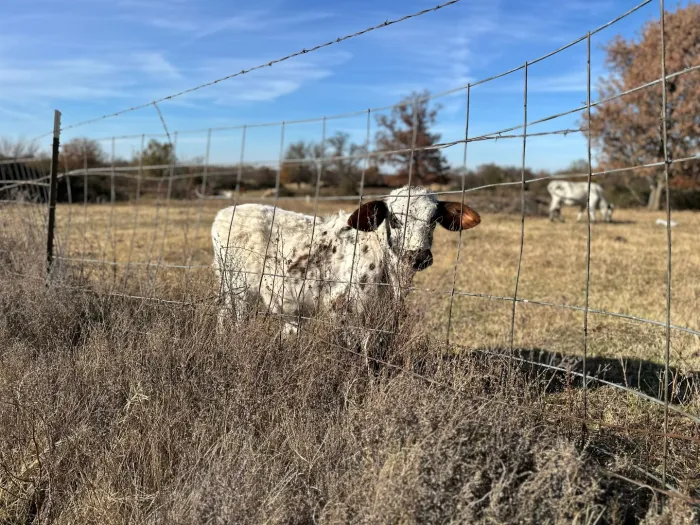
Where For the Culture showed what happens when you move consumers, Growing for Good focuses on the other side: who controls the land and production that make food sovereignty possible. As Founder and Executive Director, Apollo leads a nonprofit whose mission is to inspire the built environment through economic development and cultural enterprise for the benefit of urban and rural communities. One of its operational arms is Growing for Good Farm, a community-led agritourism and regenerative farm in Spencer, just outside Oklahoma City. The farm is being developed on 13 acres with the intent to train new growers, host educational experiences, and supply culturally resonant crops to local markets and partners.
In partnership with Langston University's agricultural programs, the project is designed to train a significant number of urban and rural growers and to move large volumes of naturally grown produce into communities experiencing food insecurity. The emphasis is on crops that are familiar and meaningful to Black families, such as okra, melons, and greens, reconnecting residents with traditions that industrial supply chains often ignore.
Early operation has already produced roughly 2,000 pounds of harvested and donated produce in a four-month window, a signal of the farm's potential as it scales. Community members are not only receiving food. They are gaining skills in production, distribution, agribusiness, and land stewardship. The farm operates as an entry point for new growers to create value-added products or supply the same restaurants that Apollo has been working to elevate.
We measure success in pounds of food harvested, receipts collected at restaurants, and contracts signed by entrepreneurs who once thought the door was closed to them.
Juneteenth Food Truck Friday and events as economic engines
Bigger Than Food Foundation also designs events that blend cultural memory with targeted economic outcomes. The annual Juneteenth Food Truck Friday in Downtown Oklahoma City brings together Black-owned food trucks for a day that is both commemorative and transactional. In partnership with Crowe Dunlevy, attendees are invited to honor the history of emancipation by buying from local Black-owned businesses. Sponsorships support programming and marketing, while the event itself drives sales and introduces vendors to new customers who may later seek them out during the rest of the year.
This event model treats culture as infrastructure. Instead of viewing festivals as one-off expenses, the foundation positions them as recurring economic engines that can be measured in vendor revenue, new customer acquisition, and media reach. Juneteenth Food Truck Friday typically attracts around 200 customers working in Downtown OKC within a three-hour window, concentrating sales into a powerful burst of income for participating vendors. For funders and corporate partners, this type of work is attractive because it is visible, community-rooted, and supported by clear outcome data.
Apollo Woods.
Why we partner with CSPI
Our partnership with the Center for Science in the Public Interest grows from this shared vision. CSPI describes itself as a food and health watchdog that wants equitable, sustainable, and science-based solutions for nutrition and health in every community. In Oklahoma City, we are applying that vision on the ground by using data, policy, and community-driven design to build an equitable food system that delivers safe, affordable, culturally relevant food while also repairing the harms of racialized land loss and disinvestment. Together, we are working to show what it looks like when national advocacy and local Black-led organizing pull in the same direction.
Centering the community in every step
At every stage, the people most affected by food apartheid in Northeast Oklahoma City shape the work. Our grower trainings, restaurant campaigns, and development conferences are designed with input from Black residents, business owners, and faith and neighborhood leaders who live with the daily realities of limited grocery access, unstable leases, and health disparities. We gather feedback through listening sessions, surveys, and informal debriefs after each campaign, then adjust everything from farm crop plans to bingo card lineups and vendor mixes so that our programs reflect community priorities rather than outside assumptions about what "healthy" or "successful" should look like.
From Houston’s Third Ward to Northeast OKC: A vision for community preservation
Food sovereignty cannot exist without land and real estate that remain accessible to the people who live in a community. Long before launching the farm, Apollo started the conversation about land and redevelopment in Northeast Oklahoma City through another business venture, NEOKC Development Group LLC and the NEOKC Developers Conference LLC.
The Developer’s Conference was inspired by Apollo's time living in Houston's historic Third Ward. When he moved to Houston in 1999, he had a front-row seat to the power of community mobilization as residents fought to preserve their culture, landmarks, and homes in the face of highway construction, gentrification, and corrupt policies. These experiences shaped his understanding of how communities could organize and resist erasure. When he later moved to Oklahoma City, Apollo brought these lessons with him, recognizing similar patterns threatening the historic fabric of Northeast OKC. His vision began modestly, just notes scribbled in a notepad in September 2017, but grew into a full-fledged conference dedicated to empowering residents and developers to work together in preserving Black communities while fostering sustainable growth. What started as one person's observations of how a community could fight for its survival became a platform for galvanizing an entire neighborhood to take control of its own future.
The NEOKC Developers Conference brings together residents, small developers, lenders, and public officials to discuss how projects get financed, how zoning works, and how local people can participate in development deals. Sessions walk through the mechanics of acquiring property, structuring a project, and engaging with city processes. For many attendees, it is the first time anyone has explained how decisions about their own blocks are made.
The conference has received recognition from the Urban Land Institute of Oklahoma through its Impact Awards program as an example of community-centered, equity-focused work in the built environment. That recognition from a respected professional organization matters because it validates the conference as a serious intervention in how development is done, not simply a neighborhood meeting.
The work of NEOKC Development Group addresses gentrification directly. Instead of treating displacement as inevitable, it equips Black residents to become owners and co-developers. The goal is to ensure that as new housing, retail, and infrastructure appear, legacy residents can hold property, participate in deals, and host their own food and cultural concepts in the new spaces.
Public policy and the entrepreneurship ecosystem
A key dimension of Apollo's leadership is his willingness to engage in public policy. Working with former Oklahoma Senator George Young Sr., he supported an appropriations request, Senate Bill 1222 from the 2022 session, that would have allocated $13.75 million from the General Revenue Fund to the Oklahoma Department of Commerce. Although the bill failed to be heard in committee, the bill would have directed funding toward commercial property development intended to support entrepreneurship in urban communities with limited retail options and included an emergency provision so the funds could move quickly. The intent aligned closely with the needs of Northeast Oklahoma City. Black founders and small businesses often face a shortage of suitable, affordable commercial space. They confront lenders who are hesitant to finance projects in neighborhoods that have been labeled risky for generations. By targeting funds to pre-development and planning for projects intended for local and minority-owned businesses, the policy sought to correct part of that imbalance.
Including this story in a national feature underscores a crucial point. Black food sovereignty is not only about gardens and restaurants. It is also about influencing how state dollars shape the commercial corridors where those restaurants and food hubs must live.
A unified strategy for Black food sovereignty
Taken together, these efforts describe a comprehensive strategy for Black food sovereignty and small business sustainability in Oklahoma. OKC Black Eats and Black Restaurant Bingo influence where people spend, which restaurants survive, and how Black chefs are perceived in the regional dining scene. The For The Culture pop-up at Paycom Center shows that Black-owned food concepts can occupy the most visible spaces in sports and entertainment venues when partners commit. Bigger Than Food Foundation and Growing For Good Farm reclaim land, train new growers, and move fresh produce into neighborhoods living with the consequences of historic disinvestment, while Juneteenth Food Truck Friday and related events translate cultural memory into tangible revenue streams.
NEOKC Development Group and the Developers Conference build a pipeline of local developers and property owners who can hold space for Black food and cultural enterprises as property values change. The collaboration around Oklahoma Senate Bill 1222 illustrates how to anchor this whole ecosystem in public investment, not only private goodwill.
What unites these projects is an insistence that Black communities in Oklahoma deserve more than temporary programs. They deserve ownership, infrastructure, and policy that reflect their contributions to the state's history and economy.
Why Apollo Woods is a national partner to watch
For national readers and potential partners, the story of Apollo Woods is not about a single organization. It is about a leader who understands that food, land, culture, capital, and narrative must be aligned. He has shown he can move large numbers of residents to support Black-owned restaurants and food trucks. He has collaborated with major institutions such as professional sports franchises, chambers of commerce, and universities. He has earned recognition from land-use professionals for equity-focused development work. He has stepped into state policy arenas where funding decisions shape the physical and commercial landscape of Black neighborhoods.
In a moment when many companies and foundations are searching for initiatives that are both community-rooted and results-driven, this combination matters. Apollo brings operational experience, a record of partnership, and a clear theory of change that connects supply chain equity, land ownership, and cultural storytelling.
Black food sovereignty in Oklahoma is not yet a finished success story. It is a live experiment that requires continued investment and collaboration. But there is already enough evidence to say that when someone treats restaurants, farms, festivals, and development conferences as parts of one system, communities gain real leverage over their own futures.
How you can get involved
For readers who want to act, there are concrete ways to plug in.
Join CSPI's Resource Hub event, "From Seed to System: Black-Led Strategies for Food, Farming, and Community Wealth," on Mar. 25, 2026, where Woods will participate as a panelist.
You can support Bigger Than Food Foundation and Growing For Good Farm by contributing to our campaigns, sharing our stories, and inviting us into conversations about institutional purchasing, supplier diversity, and land-based investments in your own city. You can participate in efforts like Black Restaurant Bingo and Juneteenth Food Truck Friday, directing everyday spending toward Black-owned restaurants and food trucks in your region. You can back policy changes that align with CSPI's vision for an equitable food system, from healthy food purchasing standards to investments that expand commercial and agricultural space for communities that have endured food apartheid. Most importantly, you can listen to and follow the lead of Black growers, restaurateurs, and organizers who are already building food sovereignty where they live.
For national outlets, this is a story about what happens when a Black leader in the heartland refuses to separate food from land, culture from capital, or celebration from strategy. For corporate sponsors, philanthropy, and impact investors, it is an invitation. Partner with the people who are already doing the work, who can show you the numbers, and who are grounded in communities that deserve not just to be fed, but to decide how the table is set.
Apollo Woods is a cultural entrepreneur and advocate who uses supplier diversity, storytelling, and land stewardship to close wealth and health gaps in Oklahoma. Through the Bigger Than Food Foundation’s supplier diversity campaigns, he works with public agencies, anchor institutions, and brands to direct more procurement dollars into Black-owned and locally owned businesses. As founder of Growing For Good Farm, a 13-acre regenerative farm in Spencer, Oklahoma, he grows culturally relevant, chemical-free crops while building farm-based enterprises with neighborhood residents. His work links equitable contracts, cultural enterprise, and community agriculture to expand food access in long-disinvested neighborhoods and demonstrate a reproducible model for community-led economic revitalization.
Learn alongside us as we work to build the knowledge and capacity of emerging and existing partners to build power so that we can achieve crucial food policy wins in the field.
CSPI heavily relies on our grassroots donors to fuel our mission. Every donation—no matter how small—helps CSPI continue improving food access, removing harmful additives, strengthening food safety, conducting and reviewing research, and reforming food labeling. We don't take donations from corporations, and our flagship publication, Nutrition Action, doesn't run any ads. That means that everything we do is fiercely independent and unbiased from any bad actors, no matter how powerful. To help keep this online content 100% free, consider donating today to support CSPI.