Nicotine is back—but is it really a wellness hack?
Ulf - stock.adobe.com.
First came the Marlboro Man and Joe Camel. Today, companies recycle Big Tobacco’s old tricks to sell nicotine pouches, mints, gums, and more, promising sharper focus or even an athletic edge. Spoiler: Nicotine isn’t harmless and most of its health claims crumble under scrutiny.
Nicotine’s health risks
“Most people hear nicotine and picture lung cancer,” writes biohacker Dave Asprey. “Wrong target. Cigarettes contain 7,000 chemicals. Pure nicotine in low doses works completely differently.”
It’s true that smoking a cigarette is far worse for your health than, say, sticking a nicotine patch on your skin. But that doesn’t mean that the patch (or gum or mint) is risk-free.
We’ve known for decades that nicotine is addictive. “Nicotine addiction is very similar to addiction to other stimulants,” says Pamela Ling, a professor at the University of California, San Francisco School of Medicine.
“Initially you might experience a little bit of a buzz from nicotine, but fairly quickly you need nicotine to feel normal. And you end up just trying not to feel terrible, using nicotine to avoid withdrawal symptoms.”
Another concern: People who use nicotine may eventually switch to cigarettes, which are far more dangerous. (More research is needed to illuminate how likely that is.)
“The major cause of harm from cigarettes is the combustion products,” says Neal Benowitz, a professor emeritus at the University of California, San Francisco School of Medicine.
“Cigarette smoke is very, very rich in carcinogens and other toxins. There’s no question that inhaling it is extremely harmful for your health.”
As for nicotine itself, there’s limited evidence on its long-term health effects, and not all the evidence points in the same direction.
That’s because the wide variety of products (e-cigarettes, patches, pouches, gums, lozenges, and more) and the wide range of doses that people consume make nicotine difficult to study.
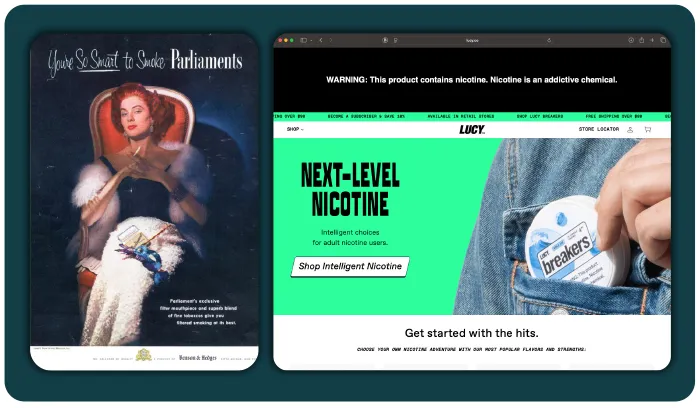
Nicotine sellers have taken a page out of Big Tobacco’s advertising playbook, trying to convince you that choosing their products is a smart move.
According to Benowitz, some of nicotine’s potential for harm comes from the fact that it releases epinephrine and norepinephrine, two hormones that constrict your blood vessels and increase your heart rate. That can cause irregular heartbeats in some people.
“The best data we have on the effects of long-term nicotine use are based on a smokeless tobacco product called snus, which is used by roughly 20% of Swedish men,” says Benowitz. (Smokeless nicotine products include pouches, gum, mints, and lozenges, but exclude vapes.)
Because so many more people use smokeless nicotine in Sweden than in the United States (where less than 3% use it), it’s easier to collect reliable data on the health effects there.
In most of the Swedish studies of snus, people who use it are not more likely to develop cardiovascular disease than people who don’t use any kind of tobacco.
For example, when researchers followed more than 130,000 Swedish men who had never smoked for up to 29 years, those who used snus (roughly 25%) were no more likely to have a stroke than those who had never used snus, regardless of how long the snus users had been using it or how much they used.
But other studies looking at the link between nicotine use and cardiovascular disease have produced inconsistent results, possibly because researchers didn’t always control for factors like how much nicotine each person in the study used.
So the jury is still out on what nicotine can do to your cardiovascular system. But that hasn’t stopped tobacco companies from cashing in.
“In 1988, a Surgeon General Report recognized that nicotine is addictive,” says Ling. “The tobacco companies hated that conclusion, so they started coordinated campaigns to fund science and public relations campaigns that would make nicotine seem like it had some therapeutic use.”
Cognitive effects of nicotine
“Welcome to Lucy, where no one is going to shame you for your love of nicotine (we get it, it’s super annoying),” says the lucy.co website. For sale: “next-level nicotine” capsules and gum.
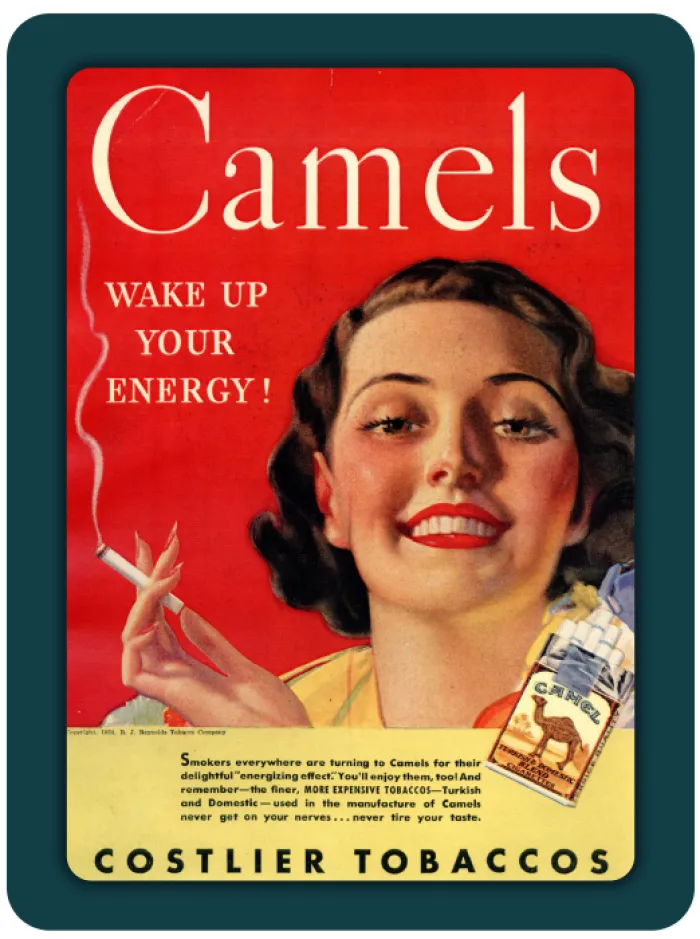
“Whether you use nicotine to enhance focus, boost your energy, or relax - there’s a Lucy perfect for you.” Sounds remarkably similar to “old-level” cigarette ads.
It’s true that specialized receptors in our nervous system become more active when nicotine molecules bind to them. And for some people, memory and other cognitive abilities might be enhanced when those receptors are more active.
Today, marketing for nicotine products sounds a lot like decades-old cigarette ads. But neither is a healthy pick-me-up.
tobacco.stanford.edu.
“Nicotine may enhance cognitive functioning for some people under some circumstances, but it is not a general tonic,” says Paul Newhouse, a professor of psychiatry and pharmacology at Vanderbilt University School of Medicine.
In a not-yet-published trial, Newhouse randomly assigned 300 adults with mild cognitive impairment to wear either a placebo patch or a patch delivering up to 21 milligrams a day of nicotine. After two years, cognitive function was no different between the nicotine and placebo groups.
(Newhouse’s study also found that none of the participants had become addicted to the nicotine patches after two years, which suggests that the risk of nicotine addiction may depend on the route of administration.)
What about nicotine as a way of dealing with anxiety spikes?
“If you’re very anxious, nicotine might calm you down,” says Newhouse. But the relief is temporary, and the anxiety will return once the nicotine levels in your body drop, which happens within a couple of hours.
Nicotine for athletes?
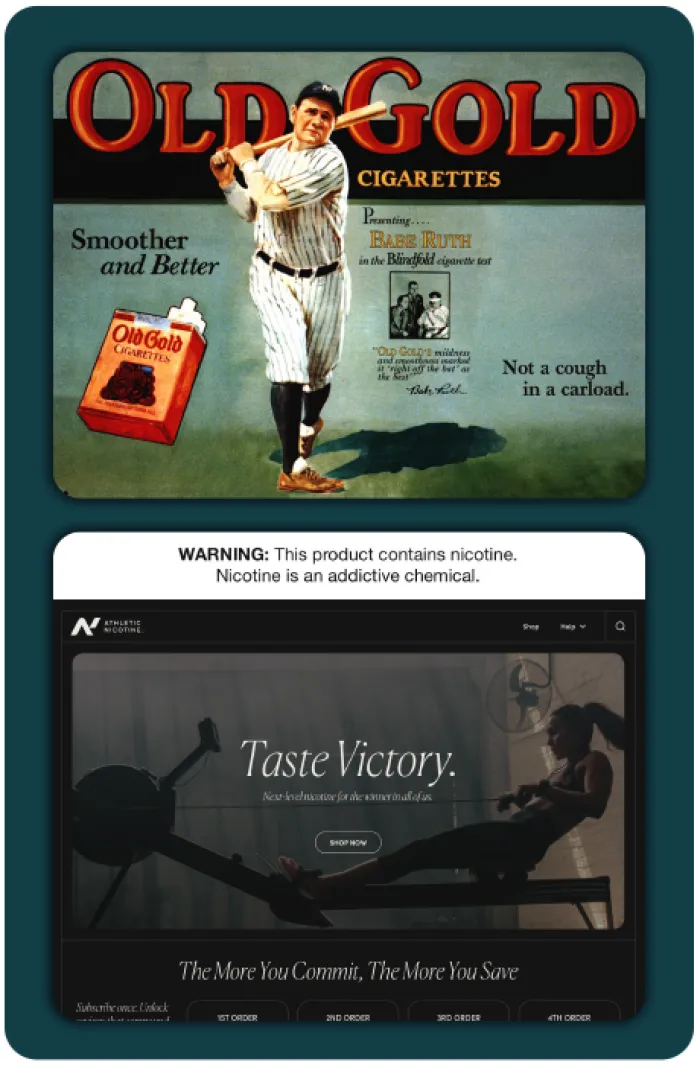
“Are you ready to try the power- packed performance pouches you’ve seen and heard about across podcasts, social media, sports, and beyond?” asks Athletic Nicotine’s website.
Nicotine for athletes? You bet.
With a website packed with images of people sprinting up stairs, lifting weights, and skiing, Athletic Nicotine invites you to “join the movement of winners balancing mind and body while crushing the challenges of the day.”
Nothing new there. Long before today’s nicotine purveyors and their promises, baseball legend Babe Ruth was pitching cigarettes. (Ruth died at 53 of throat cancer.)
Nicotine isn’t a game-changer for athletes, but Big Tobacco has been an advertising all-star for a long time.
So does nicotine improve athletic performance? Not likely.
“There’s no good evidence that nicotine can enhance endurance,” says Benowitz. It may temporarily help some people with focus on the field or in the gym, he adds. But that’s no guarantee of another home run or a better workout.
Actually, it may mean a worse one.
A study of 10 well-trained cyclists found that using a patch containing 7 mg of nicotine (roughly the amount you’d get in the highest-dose Athletic Nicotine pouch) 10 hours before exercise didn’t help them ride any faster compared to when they used a placebo patch.
In fact, during their workouts, riders had higher body temperatures after using the nicotine patches than after using the placebo patches. That put them at increased risk of heat exhaustion.
Smoking cessation
One no-argument benefit of some nicotine products: they can help some smokers quit.
And quitting matters.
“People can reduce their risk of disease if they switch to something that’s not combusted,” says Benowitz.
The FDA has approved some nicotine replacement therapies, like nicotine patches, gums, and lozenges, to help people quit smoking.
E-cigarettes (vapes) may also help. A 2025 review of 104 studies (61 were randomized controlled trials) found that e-cigarettes might be even better at helping people quit than FDA-approved nicotine replacement therapies.
But the authors highlighted that, no matter what approach you take, quitting smoking is tough. They estimated that for every 100 people using nicotine e-cigarettes to quit, between 8 and 11 might succeed, compared with only 6 out of 100 who use nicotine replacement therapies.
(Of course, even if e-cigarettes work for some people, there’s no justification for pushing them—or other nicotine products—to those who don’t already smoke, especially children, who may be drawn to them because of their flavors and over-the-top marketing.)
Wait...is this even legal?
In short, no. To legally sell over-the-counter nicotine products, companies must go through an FDA-required review and authorization process.
Take Athletic Nicotine. In 2025, the FDA sent the company a letter warning that it was selling illegal products because they hadn’t been through that review.
(We asked Athletic Nicotine whether it had responded to the FDA letter or submitted an application for its products to be reviewed. The company hadn’t gotten back to us by our deadline.)
So while brands like Nicorette sell approved over-the-counter smoking cessation products, many other products haven’t been approved for that—or any other—use.
It’s important to keep in mind, says Ling, that for the nicotine companies, it’s all about sales.
“They’re using the language of harm reduction to secure their profits and promote new products. And they really want people to ignore the time-tested things that we know work for tobacco control.”
In the end, unapproved nicotine products aren’t the best tool for quitting smoking.
Bottom line
Nicotine isn’t as bad for you as smoking cigarettes, but the potential for addiction is real. And the wellness claims for trendy nicotine products, which are often sold illegally, aren’t matched by the evidence.
CSPI heavily relies on our grassroots donors to fuel our mission. Every donation—no matter how small—helps CSPI continue improving food access, removing harmful additives, strengthening food safety, conducting and reviewing research, and reforming food labeling. We don't take donations from corporations, and our flagship publication, Nutrition Action, doesn't run any ads. That means that everything we do is fiercely independent and unbiased from any bad actors, no matter how powerful. To help keep this online content 100% free, consider donating today to support CSPI.
Our free Healthy Tips newsletter offers a peek at what Nutrition Action subscribers get—scrupulously researched advice about food of all kinds, staying healthy with diet and exercise, and more.