Home canning: How to avoid food poisoning from botulism
Dolores Harvey - stock.adobe.com.
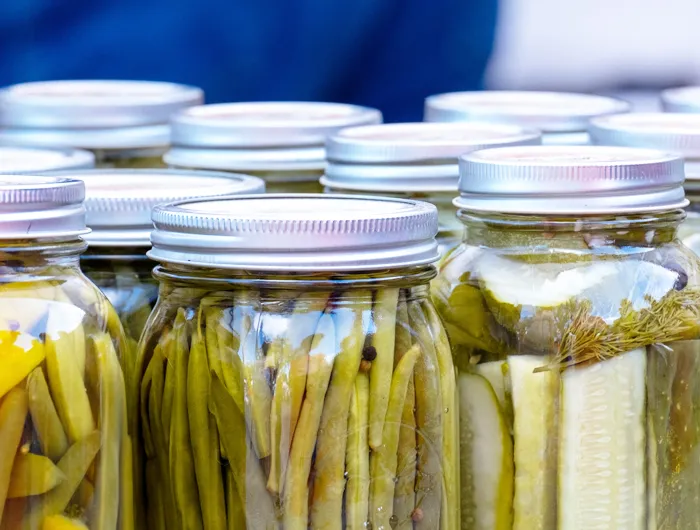
Home canning holds the promise of tomatoes, peaches, and other summer gems available year-round. Want to give it a go? Before you start, check out our answers to some basic questions about how to avoid food poisoning from botulism. For step-by-step instructions on how to can specific foods safely, rely on reputable sources that test their recipes.
Q: Why could home canning cause food poisoning?
“We’re particularly concerned about a microbe called Clostridium botulinum, which exists all around us as a spore,” says Lester Schonberger, an associate extension specialist in the department of food science and technology at Virginia Tech.
The spore itself isn’t the problem. “When we’re canning something, we’re removing oxygen from the jar and creating a vacuum,” explains Schonberger. Without oxygen, the spore can germinate (grow) into a “vegetative cell” and release the botulism toxin, which can cause difficulty breathing, muscle paralysis, or even death.
But you can prevent that growth and toxin release. It’s why canning recipes focus on the amount of sugar, salt, water, and acid in the jars, as well as the amount of time the jars spend in the canner.
Q: Should I use a boiling-water bath or pressure canner?
Some foods can be processed in a steam canner or boiling-water bath canner. But others should only be canned in a pressure canner, which processes the jars at a higher pressure to reach higher temperatures. It all comes down to how acidic the contents are. That’s becauseC. botulinum spores won’t germinate below a pH of 4.6. (On the 0-to-14 pH scale, 7 is neutral and lower numbers are more acidic than higher numbers.)
“When we’re preserving fruit jam in a boiling-water bath or steam canner, the jam is below that 4.6 pH threshold,” explains Schonberger. “That keeps the spores from germinating, so we can process the jam at the regular boiling point of water.”
In contrast, pressure canning is essential for low-acid vegetables, like green beans, which need to be heated above the regular boiling point of water to deactivate the spores. If a sealed jar of beans contained spores and the jar wasn’t processed at a high enough temperature for a long enough time, the spores could germinate and produce toxins.
Q: Why does it matter if you live in the mountains or at sea level?
Water boils at a lower temperature at higher altitudes, so water-bath or steam canning recipes typically specify longer processing times if you live in the mountains. Likewise, pressure canning at higher altitudes may require more pressure. Follow your recipe’s instructions, and check the altitude at your address.
Q: If my recipe calls for vinegar, can I use any kind?
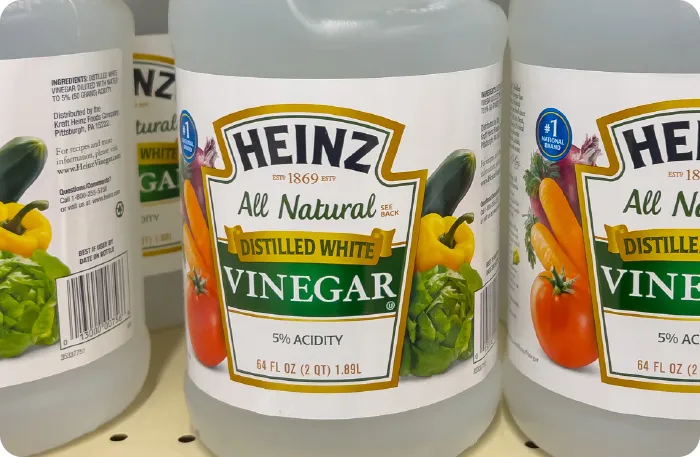
To be sure your vinegar is safe for canning, look for “5% acidity” on the front or back label.
JHVEPhoto - stock.adobe.com.
“When we can foods like relishes and pickles, we add vinegar not only to get the flavor we want, but also so that we can process the foods in a boiling-water bath canner,” Schonberger explains. “In that case, the vinegar’s low pH is making the food more acidic and keeping the botulism spores from becoming vegetative cells.”
What matters is how acidic the vinegar is—that’s true whether it’s white, red, balsamic, apple cider, or another kind. So it’s important to check the label for the vinegar’s percent acidity.
“Tested recipes were designed to be made with vinegar that has at least 5% acidity to properly acidify the foods so that you can safely preserve them,” says Schonberger. (A higher % acidity is fine, but you still need to use the same amount of vinegar that the recipe calls for.)
The bottom line: If a vinegar has less than 5% acidity—or if the acidity isn’t labeled—don’t use it for canning.
Q: Where can I find safe recipes?
For home-canning peace of mind, trust relatively recent recipes that have been tested by food scientists like those at a university extension service or have been shared by the USDA…not just any recipe you find on the internet or a social media channel.
“Research-tested recipes have determined the right proportions of ingredients, processing time, and temperature to produce a safe product,” says Schonberger. “These recipes will have their ingredients in specific quantities and will tell you how long to process something in the canner at specific temperatures or pressures.”
That’s not all. Tested recipes from trustworthy sources will also account for the size of the jars, the pH of the ingredients, the water content, and the altitude, among other factors. That way, you can be sure that if you follow the recipe, you’re processing the food in a way that prevents the botulism toxin from forming and that kills other microbes that can cause spoilage.
Q: Can I lower the sugar or salt in my canned food?
It depends. “This is why it’s so important to follow tested recipes,” says Schonberger. “They will tell you where and how you can make adjustments based on your personal preferences.”
Sugar
If a research-tested recipe calls for a specific amount of added sugar, assume you need it for safety. The sugar in some jam recipes, for example, helps bind water so that it isn’t available to C. botulinum spores. Trying to cut back on sugar? “We have tested safe low-sugar recipes for people who want them,” notes Schonberger.
Salt
In most home-canning recipes, salt is added for flavor, not safety. If a research-tested recipe says something like, “add up to a teaspoon of salt to your taste,” the amount of salt—even whether you add any at all—is up to you.
One exception: foods that you ferment before canning. “Salt is really important in a product like fermented pickles or sauerkraut,” explains Schonberger. In those cases, the right amount of salt helps make sure that the lactic acid bacteria that are needed for fermentation will grow and that many spoilage- or illness-causing microbes will die off. And as the lactic acid bacteria ferment the food’s sugars, they produce acid, which helps preserve the food.
It’s a Goldilocks situation. “With too little salt, your spoilage microbes will be able to survive and will throw off your ferment,” cautions Schonberger. “With too much salt, your lactic acid bacteria won’t be able to thrive.” Solution: Follow tested recipes, which tell you exactly how much salt to add to a given amount of food that will get fermented and canned.
Q: What if I don’t want to think about botulism?
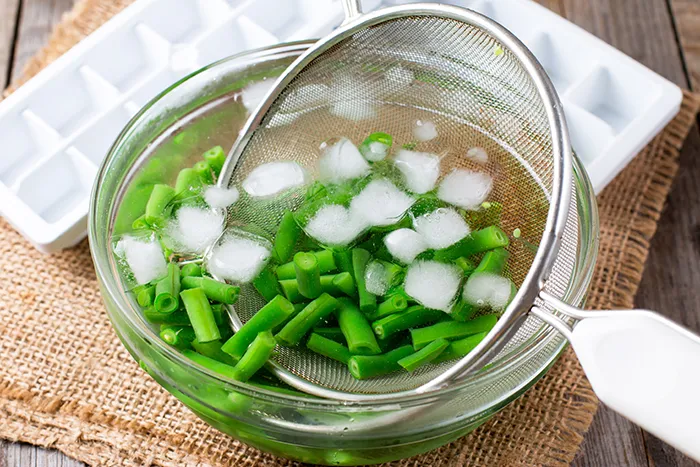
For great frozen green beans and other vegetables, blanch them before freezing: Cook them by quickly dunking in boiling water, then cold water.
qwartm - stock.adobe.com.
You can still preserve a taste of summer’s bounty, just on a smaller scale than canning. Two simpler options (as long as you have space in your freezer or fridge):
Freeze vegetables or fruits. For best results, blanch vegetables before you freeze them. (Blanching means dunking them in boiling water to cook them, and then in cold water to quickly stop the cooking.) For fruits like berries or grapes, try “tray packing”—freeze them on a tray in a single layer, then transfer them to containers. That helps prevent the pieces from sticking together in a giant clump.
Make “quick” pickled vegetables. Recipes are everywhere. The only downside: They’ve got to be kept in the fridge. How long do they last? Check the recipe; three weeks to three months is typical. Bonus: refrigerator pickles often have a crisper texture than canned ones (which have to be processed using high heat). And it’s easy to get creative and branch out from cucumber pickles to pickled carrots, onions, jalapeños, and more.
CSPI heavily relies on our grassroots donors to fuel our mission. Every donation—no matter how small—helps CSPI continue improving food access, removing harmful additives, strengthening food safety, conducting and reviewing research, and reforming food labeling. We don't take donations from corporations, and our flagship publication, Nutrition Action, doesn't run any ads. That means that everything we do is fiercely independent and unbiased from any bad actors, no matter how powerful. To help keep this online content 100% free, consider donating today to support CSPI.