Fifteen healthy snack plates you can build in minutes
tbralnina - stock.adobe.com.
No time to cook? No problem. These mix-and-match healthy snack plates turn basic ingredients into a tasty, nutritious snack that satisfies.
We don’t accept any paid advertising or corporate or government donations. Any products we recommend—like these snacks—have been vetted by our staff and are not advertisements by the manufacturers. They’re just healthy foods we think you’d like to know about!
Build a better snack plate
A great snack plate is more than a few random foods tossed together. The goal is variety and balance, so your snack is satisfying and also gives you energy.
Instead of reaching for something quick that leaves you hungry an hour later, think of your snack as a mini meal. A good place to start is with a fruit or veggie, a healthy fat or protein, a whole grain, and a flavorful dip, spread, or topping.
In school or group settings, it also helps to think about allergies before you build the plate. The Big Nine leading causes of food allergens are milk, eggs, fish, shellfish, wheat, peanuts, tree nuts, soy, and sesame. So, when snacks are being shared, simple options like whole fruit, veggies, brown rice cakes, popcorn, or clearly labeled allergen-free packaged snacks are the safer choices.
If your favorite snack contains one or more of the Big Nine allergens, try modifying the recipe. Many recipe ingredients can be omitted or substituted to make them kid-friendly for those with food allergies. Think raisins instead of tree nuts or gluten-free rice flour instead of wheat.
Why to lean into healthy snack plates
Snacks can make or break your day. A balanced plate can be satisfying and healthy. Here are a few quick nutrition notes to keep in mind as you build healthy snack plates:
Alliance - stock.adobe.com.
Fruits and veggies fill you up on nutrients. Foods lower in calorie density have fewer calories per bite. It's easier to fill up on more food with fresh (not dried) fruits or vegetables because they're lower in calorie density than most other snacks. Fruits and veggies also supply a wallop of nutrients (like potassium, magnesium, and fiber) that are in short supply in most Americans' diets. Snacking on produce is a no-brainer when 9 out of 10 of us don't eat enough vegetables, and the healthiest diets have more than 10 servings of fruits and veggies a day.
Keep saturated fat in check. Go easy on cheese, snacks made with coconut oil, or other sources of saturated fat. An extremely robust body of evidence shows that saturated fat raises LDL (“bad”) cholesterol and that LDL is a direct cause of—not just a risk factor for—heart disease, according to the American Heart Association, the American College of Cardiology, and others. And study after study shows that the risk of heart disease is slashed by replacing saturated fats with polyunsaturated fats, like those found in nuts, seeds, and vegetable oils. So, aim for snacks with healthy fats and less saturated fats.
Fiber is your friend. On average, we get only 17 grams of fiber per day, even though experts recommend 28 grams for adults. Eating more fiber is linked to better health outcomes, including lower risks of heart disease, constipation, diverticular disease, type 2 diabetes, obesity, and colorectal cancer. But it’s best to aim for fiber from a variety of foods, such as whole grains and beans, instead of relying on fiber added to processed foods or drinks. That’s because the intact “dietary” fiber that occurs naturally in grains, beans, veggies, and other plant foods is a mix of various fibers (and their health benefits), whereas “added” fiber can be a single type of fiber that’s isolated from foods or made in a lab. So, bottom line: You can’t go wrong with fiber from plant foods like veggies, fruits, beans, nuts, seeds, and whole grains.
Eat more beans and lentils.Already-cooked beans can be your best friend. They’re affordable, versatile, and work well in everything from soups to grain bowls to snack plates! Plus, snacks like Saffron Road Crunchy Chickpeas beat bean or “veggie” puffs or chips. You’re getting whole roasted chickpeas instead of bean flour or veggie powders diluted with refined flours or starches. The payoff: a nice 5 or so grams of intact fiber and protein per serving. Another good bet: Bada Bean Bada Boom Crunchy Broad Beans. Or use our recipe to make your own Spicy Chickpea Poppers.
Don’t overlook edamame because you think it takes too much effort. Edamame might be the world’s most snackable beans! Sure, the young soybeans take a few minutes to prepare. (Microwave or boil, sprinkle lightly with salt, pop out the beans, eat.) But once you bring them home from the supermarket, they’ll wait patiently in the freezer for you. Plus, you can opt for refrigerated edamame for your snack plates. No need to heat! Or better yet, try crunchy, shelf-stable Seapoint Farms Dry Roasted Edamame.
Choose 100% whole grain crackers. A go-to whole-grain cracker: Triscuits, which are mostly shredded wheat plus a touch of oil and salt. And they’re perfect for topping. Try sliced cucumber or tomato atop a schmear of hummus or labneh (tangy yogurt cheese). Or try these other whole-grain crackers that feature whole-grain wheat, rye, and brown rice:
Finn Crisp Original Sourdough Rye Thins
Sea Salt Flackers (they feature flaxseeds instead of grains)
Lundberg Organic Lightly Salted Thin Brown Rice Cakes
Trader Joe's Seeds & Grains Crispbread
Choose yogurt carefully. Look for brands that are low-fat or nonfat and have no more than 8 grams of added sugar per serving. If you’re choosing a plant-based yogurt, look for calcium-fortified options that have at least 5 grams of protein per serving.
Popcorn is tailor-made for healthy snacking. It’s a whole grain, and most pre-popped bags are made with healthy, unsaturated oils like sunflower or canola. (You can’t say the same for microwave popcorn. Most contain saturated palm oil, which stays solid at room temps.). Plus, popcorn is high in volume...so it’s low in calories per bite, and the salt is on the surface, so it doesn’t take much to taste great. Try pre-popped Angie’s Boomchickapop Sea Salt Popcorn, Skinny Pop Original Popcorn, or Whole Foods 365 Organic Reduced Fat & Sodium Popcorn. None tops 150 milligrams of sodium per serving (over 3 cups!). Or pop your own kernels on the stovetop or in an air popper.
Look for whole-wheat bread, pita, or tortillas. They’re a great base. Plus, you can stuff them or dip them.
Be mindful of misleading health claims on labels
Some snacks look healthy because of buzzwords like “made with real veggies,” “whole grain,” or “protein.”
But many of these foods only look healthy. They promise “real” veggies but offer little of the featured ingredient, contain only small amounts of it, or are mostly made of refined starches, oils, and added sugars or salt. That means they often have similar calories, carbs, and nutritional value as typical junk foods, even if the packaging suggests otherwise.
And for shared snacks, processed foods can also be trickier because they may contain one or more major allergens or be subject to cross-contamination. Whole, minimally processed foods like fruits, vegetables, beans, and nuts are the better choice.
A simple formula that actually works
Katecat - stock.adobe.com.
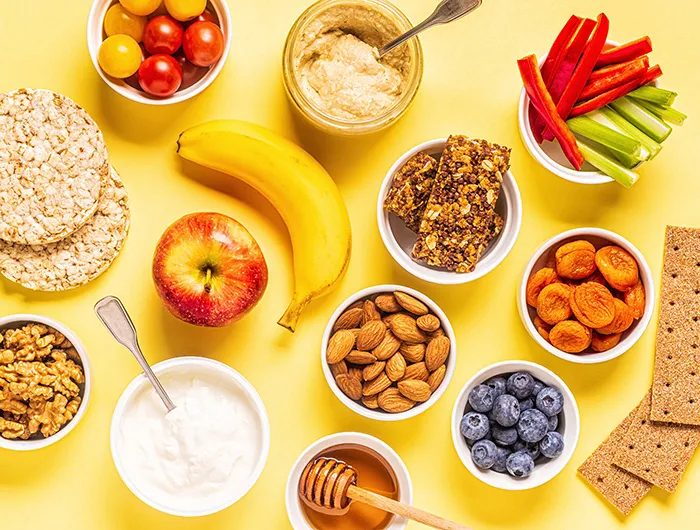
Simple doesn’t mean less good; it just means less time and effort. You want nutrients, texture, and flavor in an easy, satisfying snack. So, start with what you have. Take a quick look in your fridge and pantry, then build from there. No recipe required!
As a quick cheat sheet, use this easy mix-and-match framework, and your snack plate will be in great shape:
A veggie or fruit. If half your plate is fruits or veggies, you’re on the right track.
A healthy fat or protein. Think beans, seeds, nuts, or low-fat dairy.
A whole grain. Choose whole-grain crackers, popcorn, or a whole-wheat pita when you can.
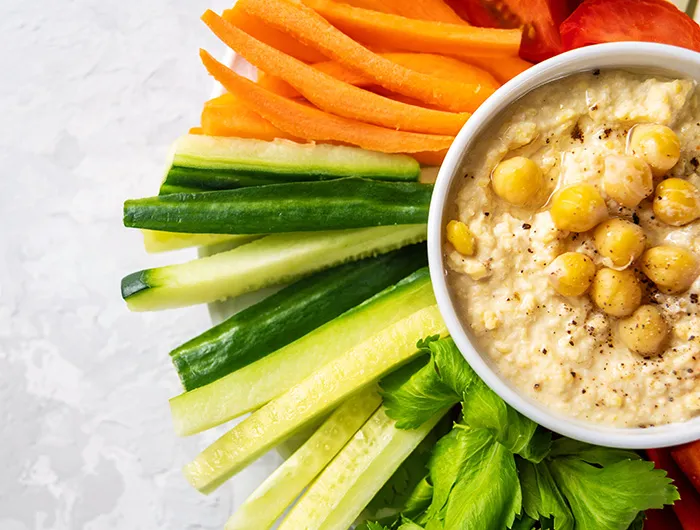
A dip, spread, or sauce. A sprinkle of dukkah, a dollop of hummus or red pepper dip, or a spoonful of salsa can turn basic ingredients into something you actually want to eat.
Think: grape tomatoes, mozzarella pearls, whole-grain crackers, and hummus. Or pair string cheese with mini cucumbers, ready-to-eat lentils, and salsa. Done!
Make it fun with a theme.
Go green
Pick all green foods for a fresh, crunchy plate:
Cucumbers, snap peas, or green grapes
Edamame or pumpkin seeds
Spinach tortilla or roasted seaweed sheets
Green goddess–style yogurt dip or herby hummus
Mix crunchy and creamy textures.
Crunchy: veggies (like carrots, celery, and radish), nuts, seeds, and crackers
And for an extra kick, add a chewy texture like dried fruit with no added sugar.
Eat the rainbow.
Make your snack plate colorful by including foods in at least two to three colors. Rainbow carrots and cauliflower are perfect for this!
Think whole-grain crackers, peanut or seed butter, green apple slices, red grapes, and a few almonds. Or try strawberries, rainbow carrots, whole-grain pita triangles, and yogurt.
Choose whole fruit, applesauce, fruit cups, and canned fruit. Clementines, small apples, or bananas couldn’t be easier. Plus, applesauce, fruit cups, and canned fruit have a long shelf life and are low-cost, easy, and healthy if canned in juice or light syrup. One example of unsweetened applesauce is Mott’s Unsweetened Apple, and Dole and Del Monte offer a variety of single-serve fruit bowls.
Pair veggies with dairy-free dips, like hummus or tahini-based dressings.
CSPI heavily relies on our grassroots donors to fuel our mission. Every donation—no matter how small—helps CSPI continue improving food access, removing harmful additives, strengthening food safety, conducting and reviewing research, and reforming food labeling. We don't take donations from corporations, and our flagship publication, Nutrition Action, doesn't run any ads. That means that everything we do is fiercely independent and unbiased from any bad actors, no matter how powerful. To help keep this online content 100% free, consider donating today to support CSPI.
Our free Healthy Tips newsletter offers a peek at what Nutrition Action subscribers get—scrupulously researched advice about food of all kinds, staying healthy with diet and exercise, and more.