New labels assure you that the product you’re buying is not an ultraprocessed food. But what does that even mean? Learn more about the differences between emerging labels such as “Non-UPF Certified” and “Non-UPF Verified,” ongoing legislative and regulatory efforts to define and/or limit consumption of UPF, and the future of non-UPF labeling.
What are ultraprocessed foods?
You may have seen news reports and headlines warning of the dangers of “ultraprocessed food.” Or you may have heard about emerging labels on packaged foods to verify that the food is not ultraprocessed. But what are ultraprocessed foods, and what do these labels actually tell you?
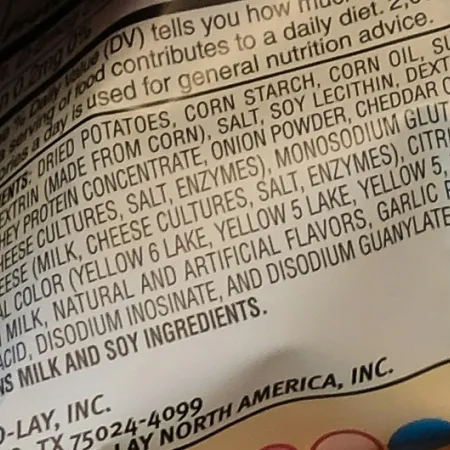
The term “ultraprocessed food” is generally understood to refer to industrially processed products made with additives or ingredients not commonly used in home cooking. This concept of “UPF” was developed by researchers in Brazil who were concerned with their country’s rising rates of diet-related disease and how this coincided with a shift away from traditional dietary patterns and reduced consumption of minimally processed foods.
While the term has seen a surge in popularity recently, there is a great deal of public confusion regarding what exactly a UPF is. When it comes to operationalizing a definition of UPF, the devil is in the details, and there’s no single agreed-upon system for categorizing foods as UPFs or non-UPFs in the US.
State and federal efforts to define and regulate UPFs
At least a dozen states have introduced or passed bills to restrict UPFs in school meals, require UPF-related food labels, ban harmful additives commonly found in UPFs, or implement other UPF restrictions. These state-level policies include a range of definitions of UPF. And a federal government initiative to develop a definition of UPF is underway: In July 2025, the USDA and FDA jointly released an official information-gathering request to develop a federal definition of UPF. As of August 2026, a proposed federal definition has been finalized in the form of a “white paper” but has not yet been released to the public.
The newly released 2025 Dietary Guidelines for Americans do not reference “ultraprocessed foods” but recommend that people limit consumption of “highly processed foods,” which a related document defines as “any food, beverage, or engineered food-like item that is made primarily from substances extracted from foods (such as refined sugars, refined grains/starches, and refined oils) and/or containing industrially manufactured chemical additives.”
An important consideration for policies that seek to limit, ban, or discourage UPFs is that, depending on the definition, there may not be strong evidence that all UPFs are necessarily harmful. Policies using an over-inclusive definition could have unintended effects like reducing access to nutritious, convenient food options. They could also be more easily challenged in court by food companies that could argue that particular products have been unfairly stigmatized.
A California law addresses this issue by first defining “UPF” and then directing the California Department of Public Health to define “UPFs of concern” as the subset of UPFs that are clearly linked to adverse health consequences and should be restricted from school meals. Similarly, CSPI has recommended that policies first define “processed foods” and then define “harmful processed foods” as the subset of processed foods that scientific evidence shows is clearly linked to health concerns.
What are third-party certification labels, and why are third-party non-UPF labels emerging?
Рудой Максим - stock.adobe.com.
Awareness of the term “ultraprocessed food” is growing. In 2025, 44% of US adults said they were familiar with the term, up from 32% in 2024. Food companies are looking to capitalize on consumers’ increased interest in avoiding UPFs by marketing their products as “Non-UPF,” especially in light of struggling UPF snack sales.
Non-UPF claims are already entering the market, even though there’s no agreed-upon system for classifying foods as UPF vs non-UPF in the US.
We’ve seen this before, with ill-defined claims like “clean” and “natural” showing up on labels. When companies look to market their products as having unique health, sustainability, or ethical characteristics, they often seek out third-party certifications where an independent company or non-profit verifies that the product meets specific standards. Third-party certifications are intended to build trust and lend credibility. But the third-party certification business model can contribute to weak standards. Companies typically pay to have their products certified and the weaker the standards, the more products are eligible for certification, and the more revenue a certification body can earn.
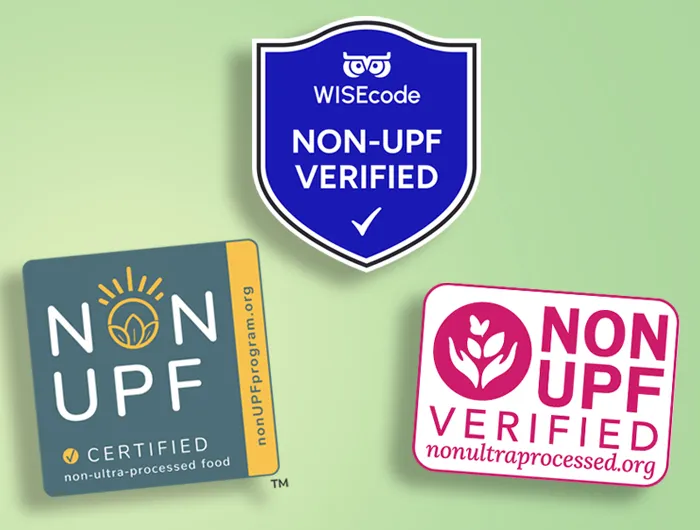
In the case of non-UPF claims, three new certification labels have recently emerged:
The “Non-UPF Certified” label from the Non-UPF Program, a nonprofit organization that aims to “support consumers’ decisions at the point of purchase and educate them about UPFs”
The “Non-UPF Verified” label from the Non-GMO Project, a nonprofit organization committed to “informed choice in service of a food system that nourishes life”
The “Non-UPF Verified” label from WISEcode, a data company behind one of several food scanning mobile apps (previously called the WISEcode app, now called the WISEcode UPF Detector app)
Third-party certifications can be useful, but many certification labels used on foods have caused confusion through:
Conflicting messages and lack of transparency. For example, in 2024, CSPI identified seven different companies offering “Carbon Neutral” certifications for foods. The companies' webpages often provided little detail about the methods they use for measuring and tracking carbon emissions, and what standards must be met for products to get certified.
Greenwashing. For example, a group called “Low Carbon Technologies” offers a “Low Carbon Beef” certification. Such a claim can make a steak seem like an environmentally sustainable choice. But the greenhouse gas emissions from beef production are substantially higher than essentially any other protein source. Even if a farmer or rancher modestly lowers their carbon footprint, such as by using renewable energy, there is no such thing as low carbon beef.
Healthwashing. For example, the Oldways Whole Grains Council certifies products with its “Basic” Whole Grain Stamp of approval as long as they contain at least 8 grams of whole grain per serving. The “Basic” stamp looks almost identical to the 100% Whole Grain Stamp, but can be found on foods with more refined grain than whole grain, misleadingly making these foods appear whole grain rich.
Other misleading implications. For example, the Non-GMO Project certifies products like almonds and coffee with its “Non-GMO Verified” butterfly label, even though there are no such things as GMO almonds or GMO coffee beans. The label can misleadingly imply a meaningful difference between products with and without the label, when the only real difference is that one manufacturer paid for the certification and the other didn’t.
Without a formal federal definition of UPF, non-UPF certifications are vulnerable to many of the same pitfalls.
What are the differences between these new non-UPF labels?
The three non-UPF labels currently on the market differ in how they define UPFs and non-UPFs, and in what processing methods, ingredients, and nutrients they take into account when assessing a product’s eligibility for non-UPF certification. Read more about each of these elements below and check out our table summarizing how the three non-UPF labels compare here.
Defining UPF vs Non-UPF
Creating a non-UPF certification requires having a system for classifying foods as UPF versus non-UPF. The “Non-UPF Certified” label from the Non-UPF Program, the “Non-UPF Verified” label from the Non-GMO Project, and the “Non-UPF Verified” label from WISEcode each takes a different approach.
nonUPFprogram.org.
The Non-UPF Program aims to use the UPF definition from the Nova classification system (the one developed by researchers in Brazil who popularized the term UPF). Nova divides foods into four categories: 1) Unprocessed/minimally processed foods; 2) Processed culinary ingredients; 3) Processed foods; and 4) Ultraprocessed foods. The Non-UPF Program aims to certify products that fall into Nova groups 1-3 and exclude products in Nova Group 4.
A challenge of Nova is that the UPF category is defined by a combination of ingredient types and processing techniques identified based on a company’s purpose for using them. The Nova UPF category aims to capture processes and ingredients that are “designed to create highly profitable ... convenient ... tasteful alternatives to all other Nova food groups and to freshly prepared dishes and meals.”
The researchers who developed Nova did not provide a complete list of processes and ingredients that would designate a food to be a Nova UPF. But according to a page on the Non-UPF Program’s website directed at prospective customers:
“The Non-UPF Program has worked extensively since we trademarked our certification in June 2024 to identify hundreds of additives and ingredients classified as Nova Group 4. We will evaluate whether your product excludes any ingredients in Nova Group 4 and whether it falls under Nova 1-3 categories.”
nonultraprocessed.org.
In contrast, the Non-GMO Project’s Non-UPF Verified Standard guide does not mention the Nova classification system at all. Instead, it summarizes its approach as follows:
“Rather than relying on a single [UPF] definition, the [Non-UPF Verified] standard approaches ultraprocessing through two essential dimensions:
1. Ingredient Integrity & Formulation
The standard restricts ingredients that are either widely recognized as harmful or characteristic of ultraprocessed formulations—especially those used to create hyperpalatable textures and flavors or replace the structure and function of real food. This includes a prohibition on non-nutritive sweeteners and limits on refined added sugar.
2. Processing Limits
Not all processing is equal. This standard distinguishes between minimal, conditional, and prohibited processing methods, requiring that products be composed primarily of minimally processed ingredients and free from high-impact chemical, structural, thermal and biological modification. These limits are applied both to individual ingredients and to the product as a whole.”
Although it’s difficult to tell for sure based on how each certifier defines UPF/non-UPF and the information they provide on their websites, it appears that a broader range of products is likely eligible for certification under the Non-GMO Project’s Non-UPF Verified standard compared to the Non-UPF Program’s Non-UPF Certified standard.
wisecode.ai.
WISEcode, on the other hand, explicitly explains that the WISEcode Non-UPF Verified Standard does not aim to operationalize the Nova UPF definition:
“While NOVA has been widely used in epidemiological research, its broad classification of 'NOVA 4' (Ultra-Processed Foods or UPF) groups together the vast majority of packaged commercial foods. This lack of granularity fails to distinguish between products with vastly different nutritional profiles, processing levels, and health impacts. This Standard establishes the definition and methodology for theWISEcode UPF™ (Wc-UPF) system. Unlike binary or quaternary systems, Wc-UPF is a high-resolution, ingredient-based approach designed to assess packaged processed foods with precision. This is a numeric Standard that differentiates foods based on a composite analysis of ingredient processing complexity, added sugar load, and the presence of specific ingredients with established safety concerns. This is not an 'allowed ingredient / disallowed ingredient' approach more commonly adopted by other classification systems.”
WISEcode’s approach is unique compared to the other two labels because it’s the only one that assigns foods a numeric score to determine if they are eligible for certification (more on that below).
Approach to processing methods
nonUPFprogram.org.
The Non-UPF Program broadly states that “Industrial Processing Methods” are not allowed for certified products, and provides a short, non-comprehensive list of examples that includes extrusion (see the example below), molding, and pre-frying.
nonultraprocessed.org.
The Non-GMO Project provides a more comprehensive list of prohibited processing methods, but generally appears to take a more lenient approach, stating that the purpose of the Non-UPF Verified standard is to identify foods that avoid “excessive industrial processing” (as opposed to any industrial processing). Notably, the Non-UPF Verified standard lists some industrial processing methods as “prohibited” and others as “conditional,” and allows certified foods to contain up to 30% of their product formulations from ingredients made using these “conditional” processing methods.
wisecode.ai.
WISEcode scores a food based on the health concerns and processing techniques applied to each of its individual ingredients, and categorizes foods into five different processing levels (Minimal, Light, Moderate, Ultra, and Super-Ultra) based on their score. There are no prohibited processing methods, but only foods categorized as Minimal, Light, or Moderate are eligible for WISEcode’s Non-UPF Verification.
An example of how this plays out for consumers: Extrusion, which is often considered a hallmark of UPFs, is a process through which a mix of (usually starchy) ingredients is forced through a shaping tool and then cut using blades to create pieces with uniform size, shape, and consistency. Foods like breakfast cereals, pastas, and corn chips are often made using extrusion. Some have posited that the changes starch molecules undergo during extrusion speed up the rate of digestion (and thus contribute to overeating and related health problems).
If a food has the Non-UPF Program’s “Non-UPF Certified” label, consumers can trust that no portion of the product has gone through extrusion. However, if a food is labeled “Non-UPF Verified,” the product might be made using extrusion. In the Non-GMO Project’s Non-UPF Verified standard guide, extrusion is not listed as a prohibited processing method. “High moisture extrusion” is specifically listed as a permissible processing method, and “high heat extrusion (≥200F)” is listed as a conditional method. WISEcode’s Non-UPF Verified standard guide does not mention extrusion at all.
Approach to ingredients
nonUPFprogram.org.
The Non-UPF Program lists several classes of ingredients that are not allowed in certified products, including Industrial Sugars & Syrups, Modified Starches & Carbohydrates, Modified & Industrial Oils, Protein Isolates/Extracts, and Cosmetic Additives (flavors; colorants; non-sugar sweeteners; emulsifiers; thickeners; emulsifying salts; and anti-foaming, bulking, gelling, glazing, and foaming agents). It also states that “some” Soluble & Isolated Fibers, and specific Preservatives that are “emerging as potentially harmful,” are prohibited. It provides examples of each class of ingredients, but no comprehensive list.
nonultraprocessed.org.
Alternatively, the Non-GMO Project provides a list of nearly 300 prohibited ingredients that was compiled not to identify ingredients serving particular food functions, but instead identified based on “quality standards and governmental regulations, including European Union regulations, PCC Community Markets, Whole Foods Market, and applicable U.S. state legislation.” (Some of these ingredients are already banned in the US food supply.)
wisecode.ai.
WISEcode has a shorter list of about 150 prohibited ingredients, called Unique Ingredients of Concern, which are “ingredients with significant safety concern (e.g., carcinogenicity, genotoxicity, serious regulatory concern)” and may be banned, restricted, or heavily regulated in the US, United Kingdom, European Union, Canada, or Australia and New Zealand.
An example of how this plays out for consumers: Artificial colors and sweeteners are commonly considered markers of ultraprocessing, and consumers may assume that foods labeled “Non-UPF” do not have any of these ingredients. These appear to be fair assumptions for foods with the Non-UPF Program’s “Non-UPF Certified” label and the Non-GMO Project’s “Non-UPF Verified” label. However, according to WISEcode, foods “may contain zero-calorie artificial sweeteners as well as natural flavors and/or emulsifiers, or possibly a single artificial color” and still qualify for the “Non-UPF Verified” label.
Approach to nutrients
Many foods contain sugars, sodium, and saturated fats that are added during processing, and consuming too much of these nutrients poses serious health risks. The FDA has strict limits on the amount of these nutrients allowed in foods claiming to be “healthy” on their labels and is currently developing a “FDA Healthy” icon that would be similar to a third-party certification label, but led by the government, and would only be allowed on products meeting the FDA healthy definition. If consumers interpret “non-UPF” as synonymous with “healthy,” non-UPF labels could end up competing with the FDA Healthy icon. So how do the non-UPF certifications’ nutrient requirements line up with FDA’s “healthy” claim?
nonUPFprogram.org.
The Non-UPF Program does not consider any nutrient-related criteria when designating a food as UPF or non-UPF, and the Non-GMO Project and WISEcode only consider added sugar content (not sodium or saturated fat).
nonultraprocessed.org.
The Non-GMO Project sets limits on added sugar content for different product types. For example, candy and chocolate with the “Non-UPF Verified” label cannot contain more than 40% added sugar, by weight; breakfast cereals cannot contain more than 15% added sugar, by weight; dairy products cannot contain more than 7% added sugar, by weight; and snack foods like crackers and popcorn cannot contain more than 2% added sugar, by weight.
wisecode.ai.
WISEcode does not set specific limits on added sugar content for “Non-UPF Verified” products, but foods with a higher percentage of calories from added sugar receive a higher score, making them more likely to fall into a higher processing category (along the spectrum from Minimal to Super-Ultra) and less likely to qualify for the “Non-UPF Verified” label.
The inconsistent approach to added sugar across the three non-UPF labels could be another source of confusion for consumers expecting clarity and consistency from food labels. And the overall lack of strong nutritional criteria could incentivize companies who want to position their products as healthful, but whose products have too much added sugar, sodium, or saturated fat to qualify for the “FDA Healthy” icon, to opt for a non-UPF certification instead.
What’s next for non-UPF labels?
Non-UPF certifications are rapidly proliferating, with popular brands like Spindrift sparkling water and Amy’s Kitchen frozen foods adopting the Non-GMO Project’s “Non-UPF Verified” label for some or all of their products and smaller brands like OKO vegetable spreads and Blue Zones Kitchen frozen meals adopting WISEcode’s “Non-UPF Verified” label.
Additional non-UPF certifications may also emerge. For example, a bill under consideration by state lawmakers in California (AB 2244) would establish a California “Non-Ultraprocessed Certified” seal based on the state’s definition of UPF, which was adopted as part of a recent law to limit certain UPFs in California schools (AB 1264).
The Food Labeling Modernization Act of 2026, a federal bill introduced by Senators Richard Blumenthal and Cory Booker in July, would prevent consumers from being confused and misled by conflicting non-UPF claims by directing the FDA to create a single, official definition of “non-UPF.” The FLMA would also prevent foods that do not meet FDA’s definition of the term “healthy” from using “non-UPF” claims to connote an undeserved “health halo.”
Should shoppers who want to avoid UPFs rely on non-UPF labels?
WavebreakmediaMicro - stock.adobe.com.
Trying to avoid UPFs? Each non-UPF label we’ve seen on the market means something different, which makes these labels—taken together—pretty unhelpful.
If your primary goal is to avoid UPFs as defined by the Nova system, you could search for products with the Non-UPF Program’s “Non-UPF Certified” label (although they don’t currently provide a list of certified products or brands on their website). But take care not to confuse this label with either of the “Non-UPF Verified” labels, since those labels can appear on products that are considered UPFs by Nova.
Also take care not to be wooed by flashy marketing campaigns, like this one from Simple Mills (owned by multi-billion dollar snack food giant Flowers Foods). In August 2026, the company took out a full-page ad in The New York Times, put up billboards in New York City and Los Angeles, and even flew a banner behind a plane in the Hamptons to announce its partnership with the Non-GMO Project’s “Non-UPF Verified” standard. But while the ads seem to imply that all Simple Mills products are Non-UPF Verified, only 60% of the brand’s products are currently certified. It’s also not clear whether those products would have met the stricter standards of the Non-UPF Program. And just because a product is purportedly “non-UPF” doesn’t mean it’s healthy. For example, Simple Mills’ Cocoa Blast Sweet Mmms pack 5 grams of saturated fat per serving from coconut oil, making them high in saturated fat. And other Simple Mills products have too much added sugar, sodium, and saturated fat to be considered “FDA Healthy.”
If your primary goal is instead to seek out minimally processed foods or eat more healthfully overall, there are better approaches than looking for foods with non-UPF labels. Many of the healthiest foods are whole foods found in the produce department or bulk foods section of the grocery store, where products may not be pre-packaged and are less likely to have labels of any kind. For packaged foods, the Nutrition Facts label and ingredients list contain reliable information to help you pick healthy foods.
Resources to help you navigate the supermarket
Use Nutrition Action’s shopping guides to help select healthier packaged foods
Try a food-tracking app if you want to understand how certain foods and portion sizes can fit into an overall healthy eating pattern that works for you
Eva Greenthal (she/her/hers) oversees CSPI's federal food labeling work, leveraging the food label as a powerful public health tool to influence consumer and industry behavior. Eva also conducts research and supports CSPI's science-centered approach to advocacy as a member of the Science Department.
CSPI heavily relies on our grassroots donors to fuel our mission. Every donation—no matter how small—helps CSPI continue improving food access, removing harmful additives, strengthening food safety, conducting and reviewing research, and reforming food labeling. We don't take donations from corporations, and our flagship publication, Nutrition Action, doesn't run any ads. That means that everything we do is fiercely independent and unbiased from any bad actors, no matter how powerful. To help keep this online content 100% free, consider donating today to support CSPI.