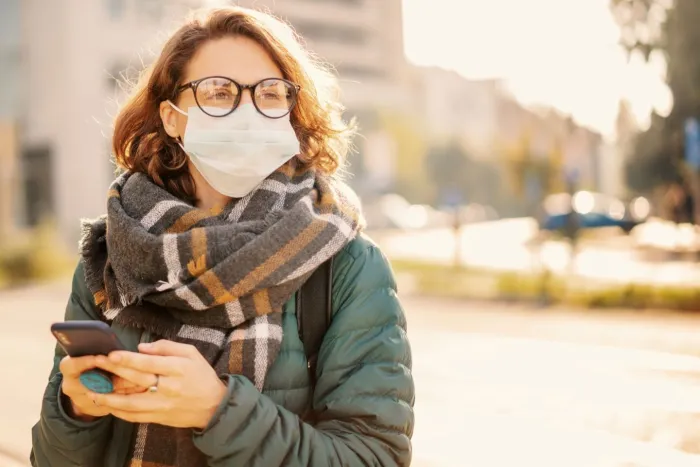
9 easy ways to stay healthy during cold & flu season
gpointstudio - stock.adobe.com.
Winter and spring tend to bring a wave of colds and flu, so it’s a good time to double down on what actually helps. The good news: You don’t need a detox, pricey supplements, or a viral vinegar tonic. Your biggest payoff still comes from basics like handwashing, good sleep, and a healthy diet. These nine simple, realistic tips can help you reduce your risk of getting sick and bounce back faster if you do.
Winter health advice can be confusing
Winter health advice can get overwhelming fast, especially when “immune-boosting” buzzwords and science-ish marketing are everywhere. The problem is that a lot of popular tips don’t match the evidence or how your immune system works, so it’s hard to know what’s worth your time and money. Here are our best tips to keep in mind.
Believe it or not, you don’t want an immune 'boost'
A lot of winter wellness advice leans on the idea that you can “boost” your immune system with certain foods, drinks, or supplements. But the idea of “boosting” the immune system is flawed because it doesn’t reflect how the system actually works.
The immune system doesn’t work like a volume knob.It’s more like a finely tuned machine, with different immune cells and signals playing unique roles in fighting off invaders. Pushing the whole system into a higher gear isn’t automatically better. If immune responses become overly active, they can create a more inflammatory environment. That can lead to autoimmune disease, where the immune system overreacts and mistakes your own body for invaders. That’s the opposite of what you want.
'Immune support' claims are rarely backed by good evidence
“Helps support your immune system,” says Airborne’s label. “ Everyday immune support gummies to help you emerge your best,” says Emergen-C Immune+ Gummies. “24-Hour Immune Support,” says Ester-C.
Companies can often get by with vague “support” claims like these. Until they push too far.
Take Airborne. The company claimed the supplement would “boost your immune system” and urged people to take it at the first sign of a cold or before entering crowded places. To back up its claims, Airborne cited a randomized clinical trial. But in 2006, ABC News reported that the study was conducted by “a two-person operation started up just to do the Airborne study. There was no clinic, no scientists, and no doctors.” And in 2008, the company paid $23.3 million to settle a class-action lawsuit that CSPI’s Litigation Department and co-counsel brought on behalf of consumers who wasted money on Airborne.
Food companies have also tried similar immunity marketing. Kellogg’s once put “helps support your child’s immunity” on boxes of Cocoa Krispies, and Kellogg’s got more than flak. In 2011, the company agreed to pay $5 million to settle a lawsuit charging that the claim misled consumers.
Cereals no longer make immune claims. But supplements are still cashing in.
9 easy tips to stay healthier this winter
The most reliable ways to stay healthier aren’t flashy. They’re about lowering your odds of exposure and supporting the habits that help your body do its job. Here are nine realistic tips that can make a difference.
Mia B/peopleimages.com - stock.adobe.com.
1. Get your flu shot
It is an undeniable fact that vaccines have been miraculous in preventing terrible diseases from polio to tetanus to measles. Numerous studies have shown they do not cause autism, a fact that is widely accepted by the scientific community.
Though vaccines don’t “boost” overall immunity, they are highly effective at preventing infectious diseases by triggering your immune system’s “memory” cells and antibodies to mount a defense against a specific virus or bacteria. That’s what helps protect you from future infections.
Enter the flu shot! Getting the flu shot every year can help guard against getting the flu. In fact, vaccination is one of the most effective immune supports we’ve got. “The goal of a vaccine is to induce the immunity that typically follows a natural infection without having to pay the price of a natural infection,” explains Paul Offit, director of the Vaccine Education Center at Children’s Hospital of Philadelphia.
Vaccines for diseases like measles, polio, and rubella typically provide lifelong protection, whereas protection against infections like the flu or Covid is shorter-lived and less hardy, and it requires boosters. Why?
The infection is local. Diseases like measles and polio are systemwide infections that result in robust immune responses. Viruses like the flu and Covid, on the other hand, infect mucous membranes like those lining the nose, throat, and lungs. The type of immune response to combat those viruses wanes faster than the response that combats systemic infections. “When you get a yearly Covid or flu vaccine, your protection will last for months and then fade,” says Offit.
The virus changes rapidly. Viruses like measles and polio don’t change much over time. But flu and Covid viruses mutate often, which means that the antibodies that your body makes against one strain or variant may not work against another.
Symptoms appear quickly. The flu and Covid viruses have a short incubation period, meaning that symptoms appear only a couple of days after you’ve been infected. Those symptoms act like a surprise assault to the body, and your immune system doesn’t have much time to mount a response. Diseases with a longer incubation time (measles symptoms, for example, typically appear 11 to 12 days after infection) allow your immune system to call its memory cells out of reserve and fortify the defense system so that it can strategically fight off the illness.
“Even if the entire world were vaccinated, viruses like the flu would still circulate,” Offit explains. “The goal of those vaccines is not to eliminate the virus; it’s to make you less likely to be hospitalized or die. And since that’s the goal, they’re all highly effective.”
Ideally, it's best to get your flu shot by the end of October. But if you haven't gotten it yet, don’t panic. Flu season usually lasts until early spring, so even February isn’t too late. If you skip everything else on this list each winter, don’t skip this.
2. Wash your hands (and don’t rely on hand sanitizer)
Handwashing is still one of the best ways to lower your risk of catching and spreading germs, especially after being out in public. Just do it thoroughly: Lather up with soap and water, and scrub all surfaces, including backs of hands, under nails, and between fingers for at least 20 seconds.
Hand sanitizer is handy in a pinch, but it’s not a perfect substitute. That’s because soap and water do a better job of removing hard-to-handle germs. Alcohol-based hand sanitizers won’t kill norovirus, the parasite Cryptosporidium, or the bacteria Clostridium difficile, which can cause life-threatening diarrhea. So, wash when you can! And if you can’t, use an alcohol-based sanitizer until you can get to a sink.
Prostock-studio - stock.adobe.com.
3. Prioritize sleep
Roughly one-third of US adults don't get enough sleep. But sleep is critical to health, and too little sleep is linked to an increased risk of short- and long-term health outcomes.
When people are exposed to a cold or flu virus, only some will get infected, and only some of them will get symptoms. So what factors determine who ends up getting sick? In a study that monitored the sleep patterns of 164 people for a week, the odds of getting sick were four times higher among those who slept six hours or less per night than among those who slept seven hours or more. Too little sleep may also be linked to a higher risk of health issues like high blood pressure, heart disease, weight gain, type 2 diabetes, and cognitive decline. Plus, poor sleep worsens mood and increases stress sensitivity.
So don’t put it off; make sleep a priority. Protecting your sleep is one of the highest-return investments you can make.
4. Try to reduce stress
Stress doesn’t just feel lousy; it can make you more vulnerable to getting sick. In studies where participants rated their stress and were then exposed to a cold virus, those who reported higher stress were more likely to become infected and to have worse symptoms. Researchers have also seen similar patterns among people facing major stressors like unemployment or relationship strain.
So, it helps to build in a few realistic stress “pressure valves” you can actually stick with: Take regular walks, practice self-care, schedule downtime, stay connected with friends and family, and try mind-body approaches like yoga and mindfulness meditation.
There’s also some evidence that those who reduced stress through meditation for four to eight months reported 20 percent fewer respiratory infections than a control group. And if stress or anxiety is starting to interfere with your day-to-day, consider seeking out additional support. For many, cognitive behavioral therapy (CBT) can be effective at reducing stress because it teaches you how to spot the worry loop, challenge unhelpful thought patterns, and gradually face anxiety triggers in manageable steps.
IVASHstudio - stock.adobe.com.
5. Keep moving (even a little helps)
Don’t worry—you don’t need a winter training montage. But regular physical activity supports overall health, and data suggest that those who exercise regularly tend to experience fewer respiratory illnesses. In two trials of roughly 560 participants, those who were randomly assigned to engage in moderate-intensity exercise daily were sick for 1.5 fewer days during a weeklong illness; that’s 23 percent shorter compared to a control group who were given no advice on exercise
So, keep moving. A daily walk, a bike ride, a short strength session—whatever you’ll actually do—counts as one of the “boring basics that work.” And if you want a low-barrier starting point, aim for moderate activity like brisk walking.
6. Don’t waste money on 'immune boosting' supplements
Vitamin C, zinc, elderberry, and vitamin D—winter marketing makes them feel like essentials. And people are certainly buying it: The immune-supplement market skyrocketed from $3.4 billion in 2019 to nearly $6 billion by the end of 2020, according to one report. And things show no signs of slowing down. Another report clocked 2023 immune supplement sales at $9.4 billion.
It’s easy to see why. Some people take these so-called immune boosters because they believe the supplements help, while others are looking for an all-natural insurance policy. And when an entire industry is worth billions, it can feel like they must be onto something. But big sales don’t equal strong evidence.
While a few dietary supplements are beneficial in specific situations, they’re the exception. In the dietary supplement marketplace, misinformation, exaggeration, and even scams abound. In the supplement marketplace, hype and vague science-sounding claims are common, butresearch is often far less exciting than the labels suggest. For example, in two small, poor-quality studies, flu-like symptoms resolved faster in people taking an elderberry supplement than a placebo. (One of the studies was funded by a supplement maker. The other didn’t reveal its funding.) Does that mean elderberry can prevent illness? Not so fast. In a company-funded trial, 312 adults who took 600 mg a day for 9 days leading up to airline travel and 900 mg a day for 6 to 7 days during and after travel were no less likely to catch a cold than placebo takers.
Maya - stock.adobe.com.
7. Don’t expect a fire cider miracle
If your social media feed includes any health and wellness content, you’ve probably heard of fire cider, a tonic (often homemade) prepared by steeping ingredients such as onion, garlic, horseradish, jalapeño, ginger, turmeric, cayenne pepper, lemon, orange, and fresh herbs in unfiltered apple cider vinegar. And fire cider fans claim it can “boost immunity” and fight parasites, bacteria, and viruses, plus ease heartburn and muscle and joint pain, reduce inflammation, balance blood sugar, and improve heart health.
Here’s the problem: No clinical trial has tested the health benefits of fire cider. While there is some limited evidence that drinking a tablespoon or two of vinegar before a meal can lower post-meal blood sugar levels, it’s not clear that any blood sugar benefit from vinegar extends beyond a single meal. And don’t count on fire cider for heartburn relief, either. Heartburn isn’t an acid problem; It’s due to a valve between the esophagus and stomach that relaxes when it shouldn’t.
Beyond blood sugar and heartburn, nearly all the other fire cider claims hinge on a big assumption: that the ingredients’ vitamins, minerals, antioxidants, and polyphenols end up in the final tonic. But there’s no evidence that they do.
And even if they did, it’s still unlikely to prevent or treat colds, flu, or other infections. Most studies show no fewer (or shorter) bouts of colds or flus when people are given extra nutrients like vitamin C, zinc, or vitamin D, and extra nutrients are likely beneficial only if you’re deficient in that nutrient. So if you like the taste, fine, but don’t expect an extract of garlic, ginger, citrus, and cayenne pepper to be a cold-and-flu shortcut.
8. Focus on a flexible, nutrient-dense diet
A flexible, nutrient-dense diet supports long-term health. That’s not to say that eating a healthy diet today will help prevent infection from a virus you inhale tomorrow. But eating a healthy diet can lower your risk of other issues—like type 2 diabetes, hypertension, and heart disease—that may make a cold, flu, or Covid more severe (and dangerous). The key is choosing an approach you can actually stick with because it fits your preferences, budget, and schedule.
That’s the spirit behind "The Uncompromised Dietary Guidelines for Americans, 2025-2030.” The “Eat Healthy Your Way” recommendations emphasize flexibility while also encouraging more vegetables, fruits, whole grains, beans/peas/lentils, nuts, seeds, and healthier oils, while keeping added sugar, saturated fat, and sodium in check in a way that fits your culture, budget, schedule, and preferences. These cozy, winter recipes from the Healthy Cook might be a great place to start. And aim for progress over perfection: what matters most is your overall pattern across days, not one “good” or “bad” meal.
Most importantly, make it fun. Food should bring joy and comfort as well as nourishment, because the best eating pattern is the one you like, can afford, and will stick to.
olezzo - stock.adobe.com.
9. If you do get sick, stop the spread and recover smart
You did all the right things, but suddenly, your throat is sore, your nose is stuffed, and you’re achy. Now what?
If you have symptoms, be as considerate as possible to minimize harm to others. Don’t spread germs: Wash your hands, wear a mask, and avoid socializing if you can.
If you have the flu and are over 65 or at a higher risk of complications, your doctor may prescribe an antiviral drug. But you have to start taking them within the first two days of feeling sick, and they’ll only lessen the duration of the flu by about a day.
For those who aren’t over 65 or at risk, all you can do is treat the symptoms. Antibiotics kill bacteria, and since colds and the flu are caused by viruses, taking antibiotics won’t help and could increase the odds that bacteria will become resistant to the drugs when we need them. Instead:
Get rest. When you feel like lying on the couch, do it. The urge to rest is triggered by inflammatory cytokines (proteins the immune system makes when it’s fighting off a bug). Get rest so that your immune system has more energy to fight off the virus.
Stay hydrated. Fluids are thought to help loosen mucus and replace the water lost if a fever makes you sweat.
Don’t overdo OTC drugs. Using over-the-counter combination cold formulas that include antihistamines, cough suppressants, decongestants, and/or pain relievers may not be worth it, since you may not need all of the drugs and they may have side effects. For example, antihistamines and cough suppressants and expectorants (which thin mucus and make it easier to cough) can cause dizziness, and decongestants can raise blood pressure and may cause insomnia. Instead, pick products with either a single ingredient (or a short list of ingredients) that address your most serious symptoms.
Consider acetaminophen. If you want to treat a fever, aches, or a headache, try acetaminophen (Tylenol). Ibuprofen, naproxen, and aspirin can cause side effects like stomach ulcers or kidney issues, so acetaminophen is a better choice. But don’t take more than 3,000 mg a day of acetaminophen. More can damage the liver.
Bottom line
Winter health doesn’t need a miracle tonic. Nail the basics, be skeptical of “immune boosting” marketing, and let your habits—not hype— do the heavy lifting.
CSPI heavily relies on our grassroots donors to fuel our mission. Every donation—no matter how small—helps CSPI continue improving food access, removing harmful additives, strengthening food safety, conducting and reviewing research, and reforming food labeling. We don't take donations from corporations, and our flagship publication, Nutrition Action, doesn't run any ads. That means that everything we do is fiercely independent and unbiased from any bad actors, no matter how powerful. To help keep this online content 100% free, consider donating today to support CSPI.
We name names, remain strictly objective, and deliver scrupulously researched advice about food of all kinds, staying healthy with diet and exercise, and more.