
Vladislav Nosik - stock.adobe.com.
What's in the healthiest diet
Want to protect your heart, eat more fruits and veggies, and cut unhealthy carbs? One of the healthiest diets—it’s endorsed by the American Heart Association, the American College of Cardiology, and other health authorities—is DASH (Dietary Approaches to Stop Hypertension).
That’s because a DASH-style diet is low in saturated fat, added sugar, and salt, and rich in fruits and vegetables. It’s also rich in nutrients like potassium, magnesium, calcium, and fiber.
In 1997, a landmark study found that a DASH diet could lower blood pressure as well as some prescription drugs. That news was a bombshell, because high blood pressure (hypertension) is a major risk factor for heart attacks and strokes.
The OmniHeart study diets
Then, in 2005, came another news flash. The OmniHeart study reported that two variations of the DASH diet were even better for your heart than the original:
The higher-protein variation replaced some of DASH’s carbs with protein—half from plant sources (like beans, peas, and nuts) and half from animal foods (like fish, lean poultry, and low-fat dairy).
The higher-healthy-fat variation was a Mediterranean-style diet. It replaced some of DASH’s carbs with healthy fats like oils, salad dressing, mayonnaise, nuts, fatty fish, and avocado. The oils—like canola, olive, and soybean—were polyunsaturated or monounsaturated, not saturated like coconut or palm.
The two OmniHeart diets beat the original DASH diet because they were better at lowering LDL (“bad”) cholesterol and triglycerides. Click here to read more about the studies behind the DASH and Omniheart diets.
Our take on the OmniHeart Diet
We’ve created a hybrid of the two OmniHeart diets, with a “wild card” that lets you eat one extra serving of carbs, protein, or healthy fat each day.
Here’s how many servings to aim for—and what a typical serving consists of—if you eat roughly 2,000 calories a day.
Wondering how anyone can eat 11 servings of vegetables & fruit a day? Relax. A serving is often just a half cup. Serving sizes for other foods—like fish & poultry, grains, and sweets—may also surprise you. A typical restaurant serving is huge in comparison.
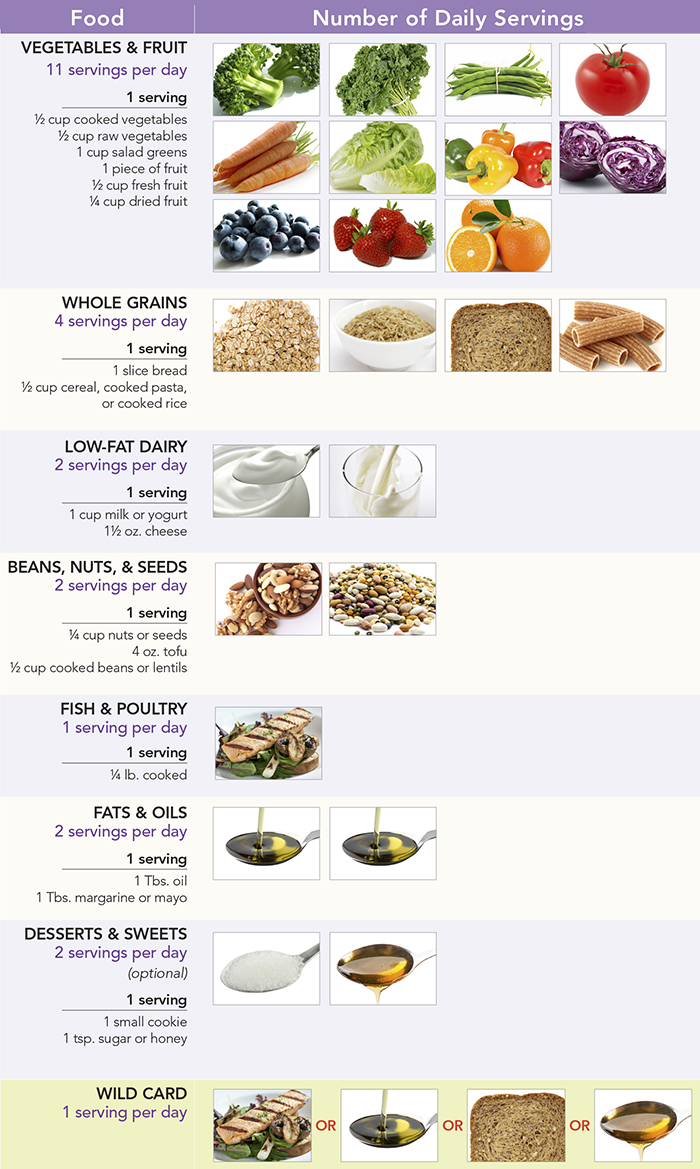
Note: The Wild Card lets you add about 120 calories’ worth of fish & poultry, fats & oils, whole grains, desserts & sweets, or any other category above.
Daily goals (for roughly 2,000 calories a day):
- Saturated fat: 14 g
- Sodium: No more than 2,300 mg
- Fiber: at least 30 g
- Protein: 85 g (up to 105 g if fish or poultry is your “Wild Card”)
- Potassium: 4,700 mg
- Magnesium: 500 mg
- Calcium: 1,200 mg
Don’t want to count servings?
Fill half your plate with fruits and vegetables, shrink the unhealthy carbs, replace fats (like butter) with oils, cut back on salt, and limit added sugar. That’ll get you most of the way there.
See a full day's worth of meals and snacks on the OmniHeart Diet
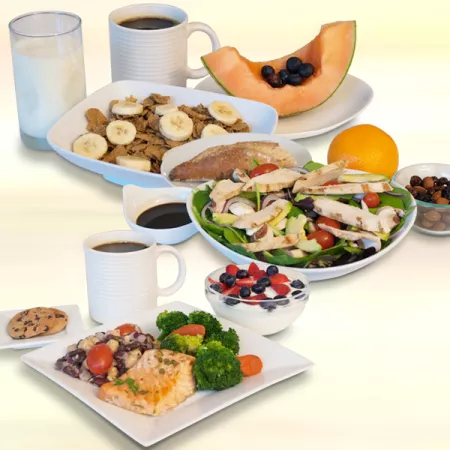
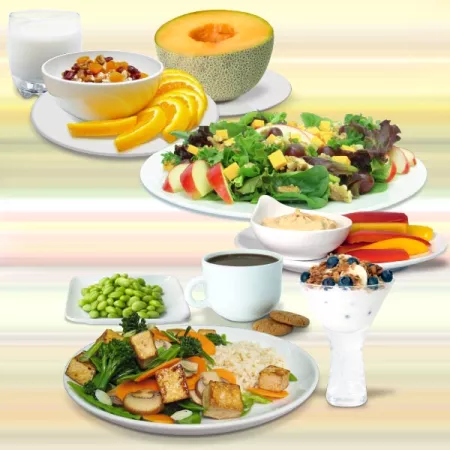
Make vegetables a main course

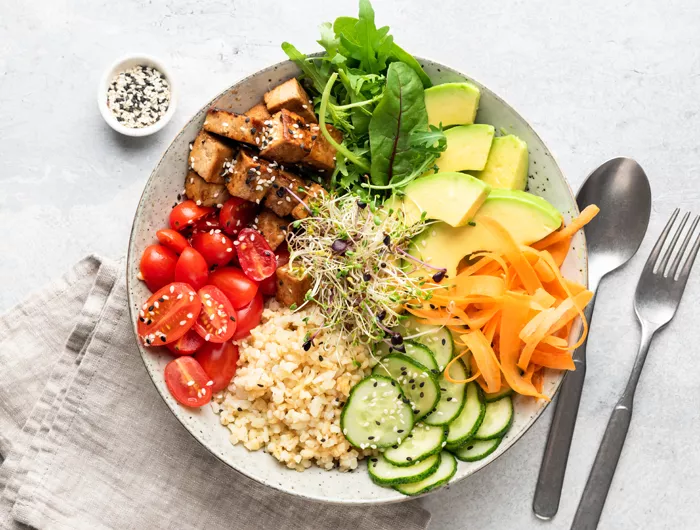
If you want 11 servings of vegetables or fruit a day, they’re going to fill up at least half of your plate at lunch and dinner. It’s easy to polish off 3 or 4 pieces of fruit as snacks or with breakfast or lunch. But when you’re shooting for 6 to 8 servings of vegetables a day, it makes sense to make them part of a main dish like stir-fried vegetables, vegetable curry, vegetable fajitas, or a main-dish salad, which could have chunks of chicken, fish, or tofu mixed in.
Used to having chicken or seafood as your main dish for dinner?
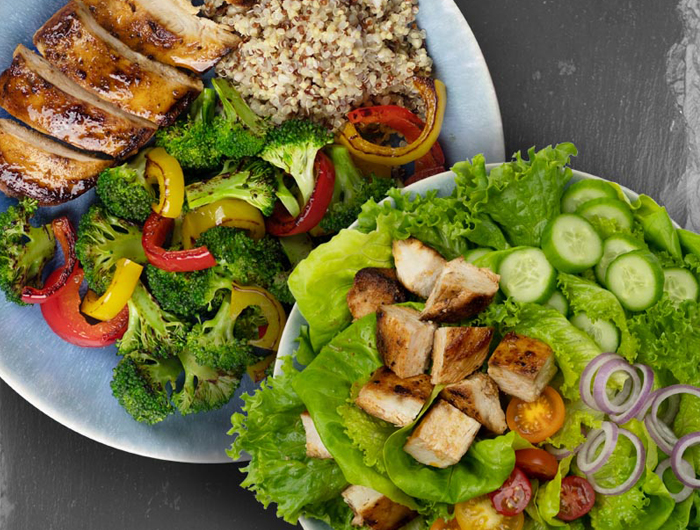
Surround a small portion—about the size of a deck of cards—with enough side-dish vegetables or salad to reach your veggie total.
It’s not just that you need to boost the vegetables, but that by eating more of them, you’re eating less of other foods…like grains.
Go easy on grains
Even whole grains are limited to four servings a day if you’re shooting for roughly 2,000 calories. And a serving is a thin (1 oz.) slice of bread, not a typical (4 oz.) bagel.
Eat a small bowl of cereal for breakfast and a sandwich at lunch, and you’re left with just a half cup of cereal, rice, or pasta for dinner.
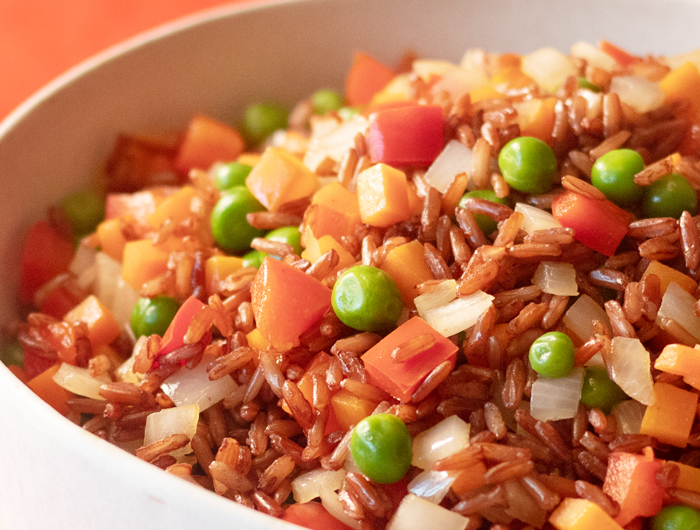
A half cup isn’t much. It wouldn’t even fill up a tennis ball. A solution? Bulk up your serving of grains with vegetables. It’s easy. Add sautéed or roasted veggies to your cooked brown rice or quinoa. Or toss your whole wheat pasta with grilled or sautéed mushrooms, bell peppers, and/or zucchini, or with sautéed spinach or kale.
Photos: © Jennifer Urban/CSPI (top plate), Olesya/stock.adobe.com (stir-fry with broccoli), Chart: © fotolia.com— EWA BROZEK (broccoli), chiyacat (greens), EWA BROZEK (green beans), JKM191 (tomato), arnowssr (carrots), dasuwan (lettuce), Aptyp_koK (peppers), Juan Jose Gutierrez Barrow (cabbage), Elena the wise (blueberries), Michelle Robek (strawberries), Volff (oranges), luismolinero (oats), Daniel Gilbey (rice), Stefanie Leuker (bread), egal (pasta), angelo.gi (yogurt), dip (milk), Natalia Merzlyakova (nuts), FPWing (beans), cultureworx (salmon), Paylessimages (oil), pockygallery11 (sugar), akulamatiau (honey), Kate Sherwood/CSPI (all others).
Subscribe to Nutrition Action
Live better and longer with Nutrition Action. We dig into the science, name names, and remain strictly objective.